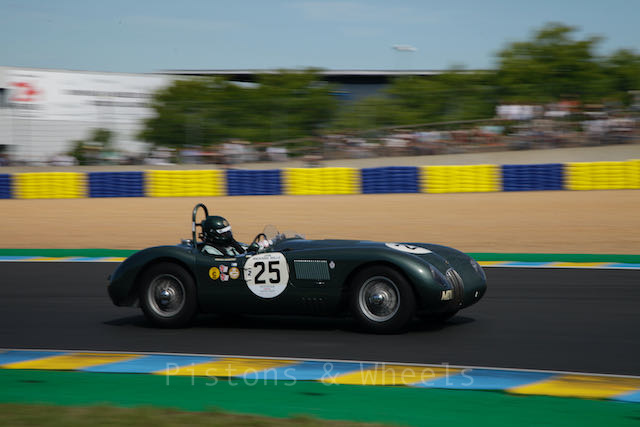
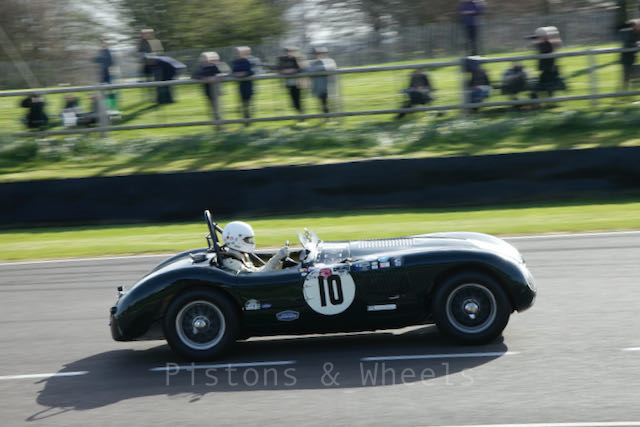
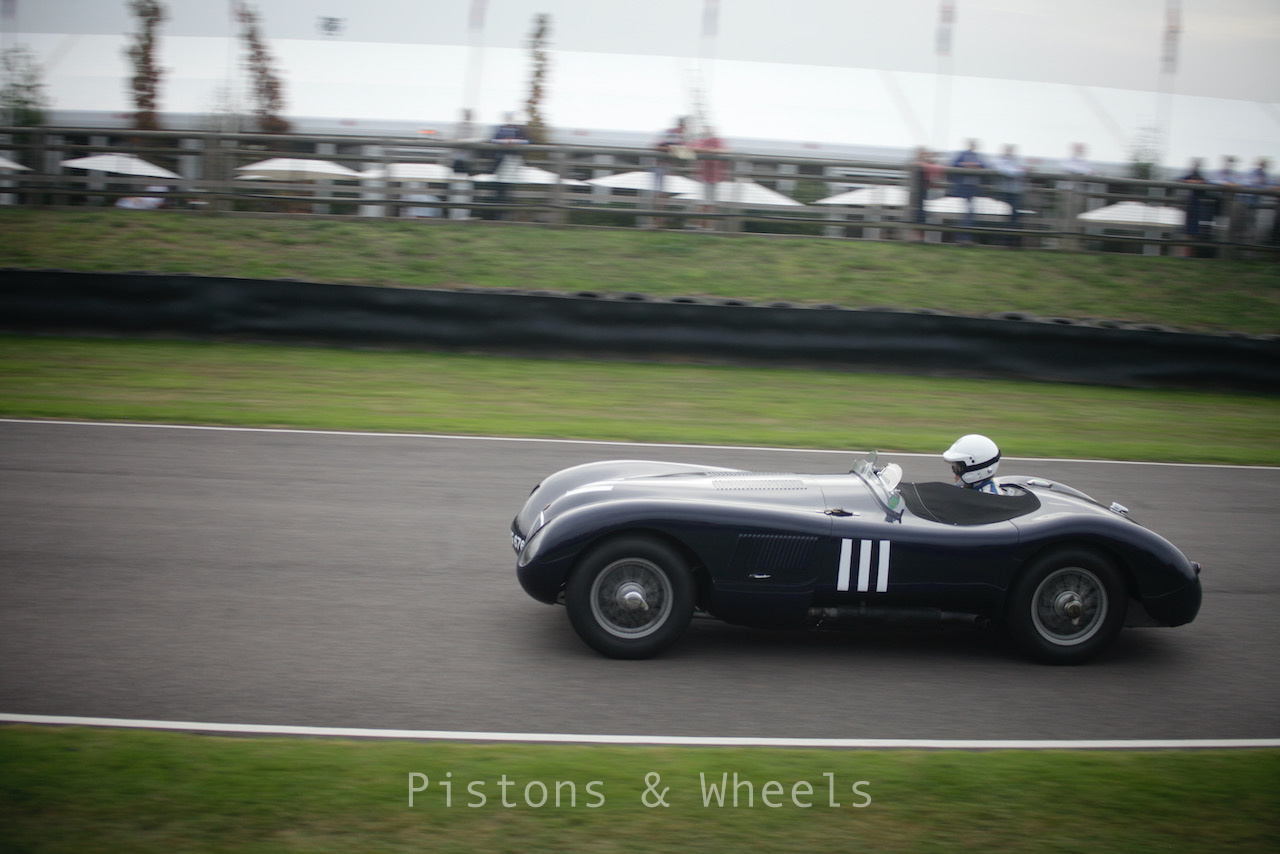
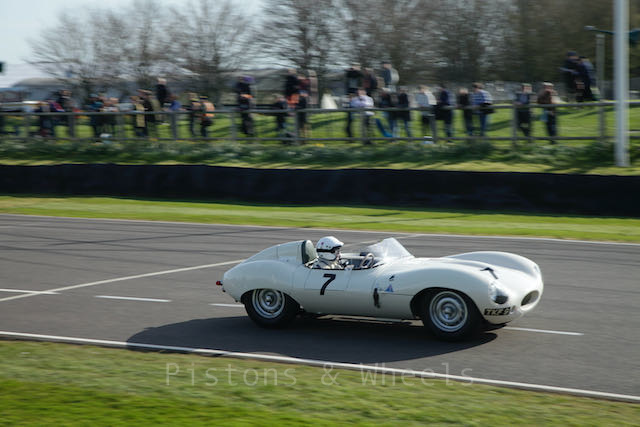
Jaguar Type-D et les 24h du Mans (part1)

Après la victoire de 1953 (objet d’un article précédent), Jaguar décida d’étudier le dessin d’une nouvelle voiture: le projet D.

Sir William Lyons fixa à ses ingénieurs 3 objectifs par rapport à la Type-C : gagner du poids, de la puissance et augmenter la vitesse de pointe. Pour ce faire ils utilisèrent une nouvelle technologie : un chassis monocoque en aluminium, à la place du chassis tubulaire de la Type-C. Concernant le moteur, Jaguar décida de continuer avec le bloc XK de 3422cc, le 6 cylindre en ligne mais l’ingénieur en charge du département moteur, Harry Weslake, réussit à faire passer sa puissance à 240 Ch. Concernant la vitesse de pointe c’est Malcolm Sayer qui travailla sur la nouvelle carrosserie. Il réalisa une ligne encore plus aérodynamique que celle de la Type-C et plaça un aileron vertical à l’arrière du dossier du pilote en vue de stabiliser la voiture à haute vitesse.

Dès les premiers essais la voiture se révéla très rapide et l’édition des 24h du Mans de 1954 promettait d’être serrée entre les voitures anglaises et les Ferrari 375 Plus et leur moteur V12 5 litre de plus de 240 Ch. Trois Jaguar Type-D seront au départ, les chassis XKD402 avec le num 14 piloté par Tony Rolt et Duncan Hamilton, XKD403 avec le num 12 piloté par Stirling Moss et Peter Walker et XKD404 avec le num 15 piloté par Peter Whitehead et Ken Wharton. Dès le départ la Ferrari 375 Plus de José Gonzalez et de Maurice Trintignan devance la Type-D de Rolt et Hamilton mais à moins de 2 heures de la fin de la course, sous une pluie battante la Ferrari ralenti et rentra au stand. L’allumage semble noyé et le moteur ne tourne plus sur ses 12 cylindres. Le temps de la réparation, la Jaguar Type-D refait son retard et lorsque Gonzalez quitta les stands les deux voitures étaient dans la même minute. La dernière heure est une suite de records du tour mais la Ferrari passa la ligne en premier avec le plus petit écart alors enregistré au 24h du Mans : moins de 4 km. (NB: A noté que lors de l’édition de 1969 l’écart entre la Ford GT40 de Ickx et la Porsche 908 d’Hermann-Larousse, les deux premiers, ne sera que de 100m mais ceci fera le sujet d’un prochain article). La légende dit que Ferrari aurait utilisé plus de mécaniciens que le nombre autorisé pour remettre la voiture en état mais Jaguar refusa de porter plainte argumentant que la victoire se gagne sur la piste et non devant les tribunaux.

L’édition 1955 des 24h du Mans est dramatiquement connue. L’accident et l’embrasement de la Mercedes dans la foule fut tragique et reste à ce jour un des plus grave du sport automobile. Les autorités dirigeantes de la course décidèrent de ne pas interrompre cette dernière en vue de faciliter le travail des secours et des ambulances. Les concurrents ignorant les conséquences dramatiques de l’accident continuèrent à se battre sur les 13 km du circuit de la Sarthe comme lors des précédentes éditions de la course.

En 1955, l’aéro des Jaguar Type-D avait été retravaillé. Le nez est plus long et le pare brise est plus enveloppant en vue de se prolonger par la dérive arrière. En plus des trois voitures d’usine, deux autres Jaguar étaient engagées par Cunningham et par l’écurie Francorchamps.

Les 3 officielles : le châssis XKD505 pour la num 6 piloté par Mike Hawthorn et Ivor Bueb, le châssis XKD506 pour la num 7 piloté par Rolt et Hamilton, le châssis XKD508 pour la num 8 piloté Don Beauman et Norman Dewis. Une voiture était engagée par Cunningham le châssis XKD507 pour la num 9 pilotée Phil Walters et Bill Spear. L’Ecurie Francorchamps engageait le châssis XKD503 pour la num 10 pilotée par Johnny Claes et Jacques Swaters.

Ferrari présentait sa nouvelle voiture, la 121 LM avec son moteur de 4.4 l, un 6 cylindres développant 330 ch. Mercedes revenait avec la nouvelle 300 SLR, pilotée par Moss et Fangio et Levegh. leur moteur était un 8 cylindres de 3 l de 300 ch mais surtout les voitures étaient équipées d’un système de freinage révolutionnaire : « intrados ». Un volet, positionné derrière le pilote, qui se levait lors du freinage et qui permettait de freiner aussi fort que les voitures équipées de frein à disque. Aston Martin sera également présent avec les DB3S et Maserati avec les 300S.

Une fois le départ lancé, deux Ferrari s’élançaient en tête suivies par deux Jaguar et la Mercedes de Levegh. Fangio a accroché le bas de son pantalon dans le changement de vitesse en voulant imiter le style des départ de Stirling Moss en sautant dans la voiture. Suite à cela il fut englué dans le peloton mais dès la première heure de course il va remonter un à un tout les concurrents. Vers 18h30 Fangio revint sur la Jaguar et Hawthorn se battit comme un diable pour contenir la Mercedes. Nous ne sommes que quelques années après la fin de la guerre et Hawthorn, en bon anglais, refusait de se faire dépasser par une voiture allemande. Ils alignèrent les tours à vive allure et prirent même un tour d’avance à Pierre Levegh qui ménageait sa monture en vue des 24 heures de course. Malheureusement, lors d’une manœuvre dans la ligne droite des stands, l’Austin Healey 100S de Macklin fit un écart pour éviter la Type-D d’Hawthorn et propulsa la Mercedes de Levegh hors de la piste avec les répercussions dramatiques que nous connaissons.

Sur la piste, la course continue et bat son plein, Moss et Fangio sur leur Mercedes se battent à coup de secondes avec la Type-D de Hawthorn et Buel. Du côté de Ferrari, la 121LM de Castellotti, après s’être battue avec les hommes de têtes abandonne sur des soucis moteur dès la 5e heure. Les Ferrari de Trintignan et celle de Phil Hill ne terminèrent pas la nuit. A la mi-course les trois voitures officielles de la Scuderia avaient abandonné. A ce moment là, l’usine Mercedes de Stuttgart intime l’ordre à Alfred Neubauer de retirer les deux Flèches d’Argent encore en course.

La Jaguar Type-D de Mike Hawthorn et Ivor Bueb n’ayant plus d’adversaires à son niveau, termina la course en roue libre et remporta une troisième couronne à l’usine de Coventry, laissant l’Aston Martin DB3S de Peter Collins et Paul Frère à plus de 62 km.

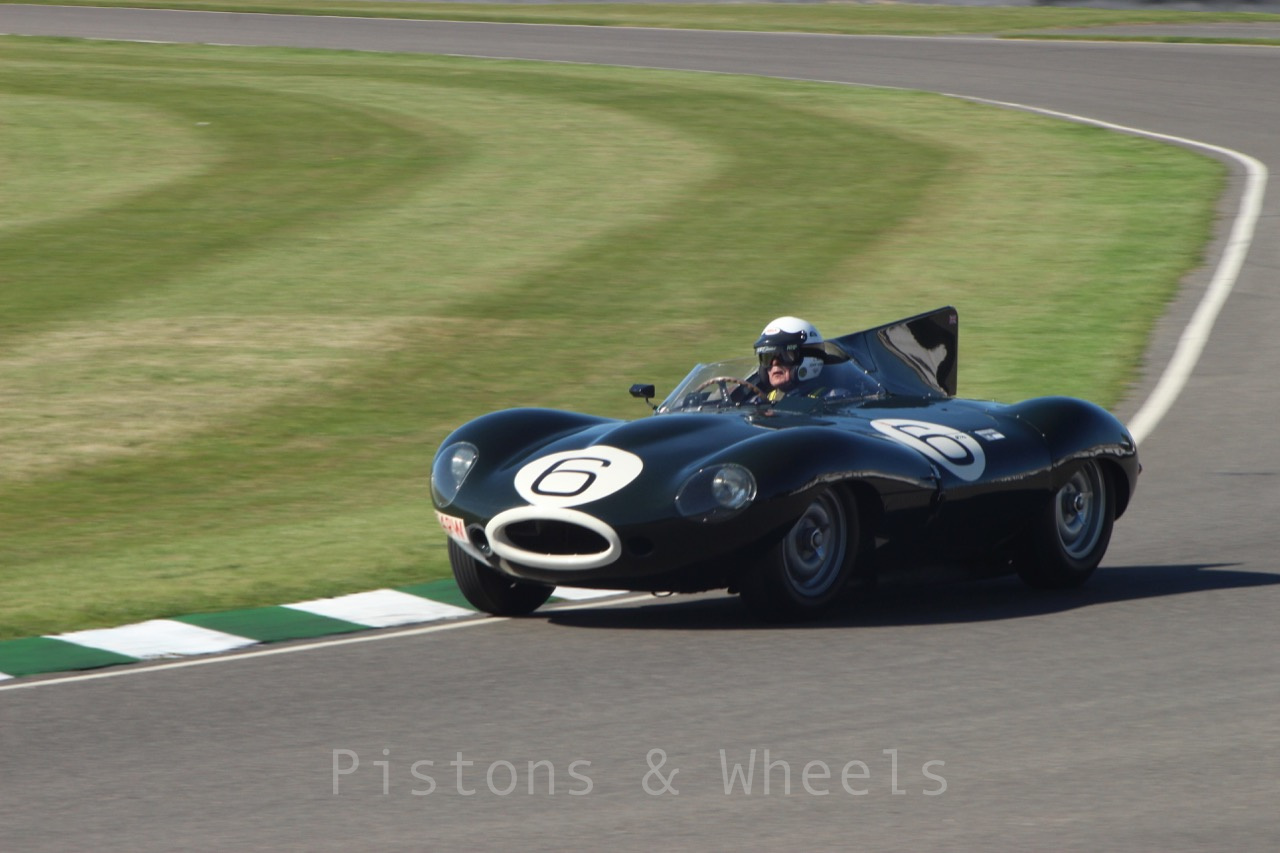
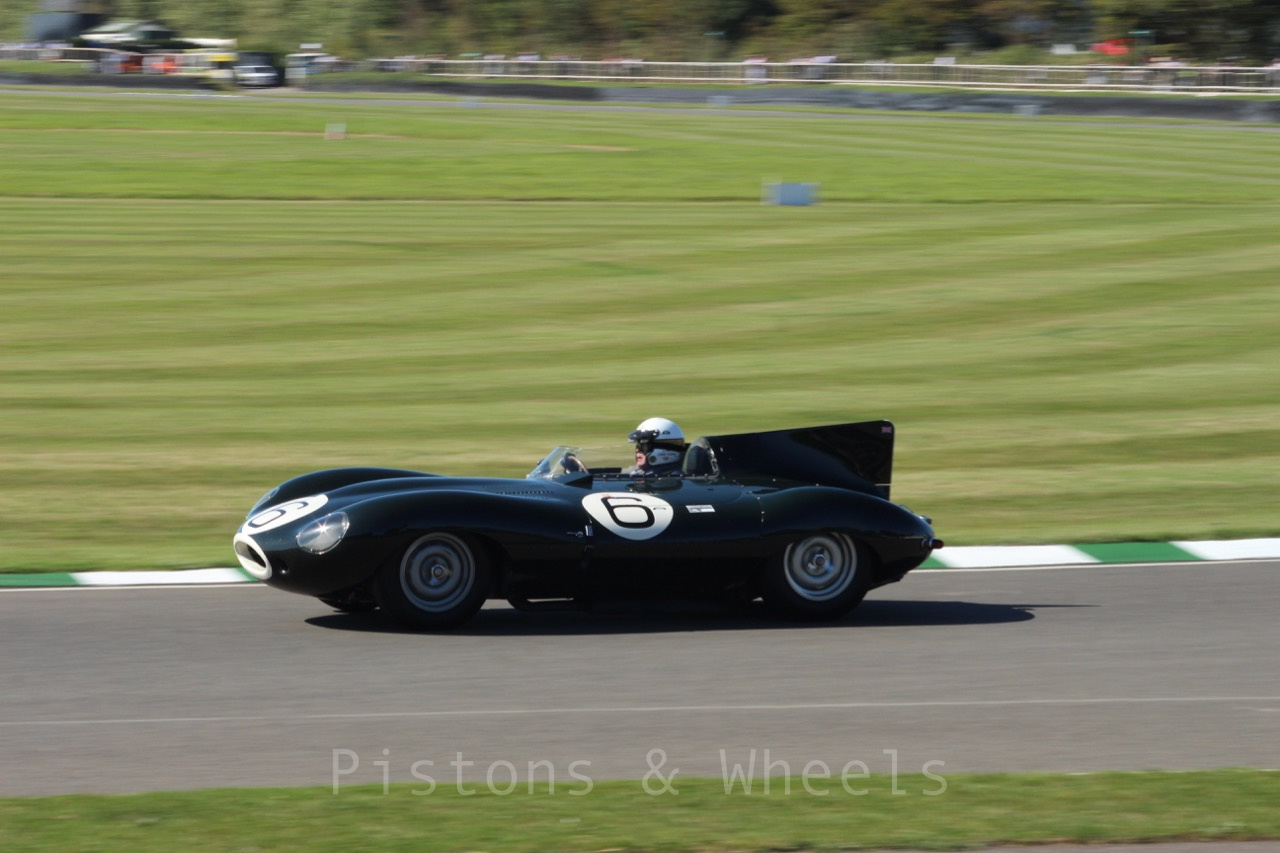
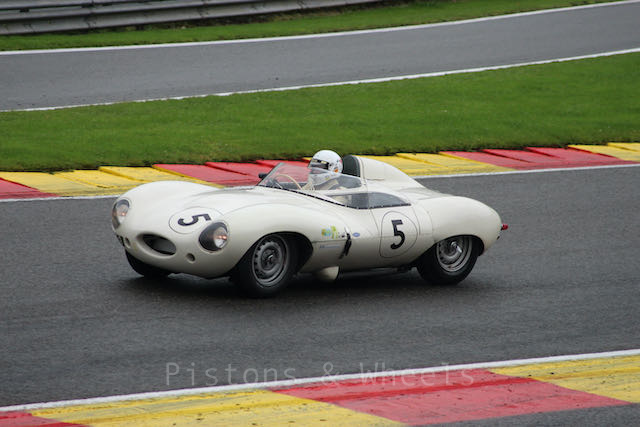
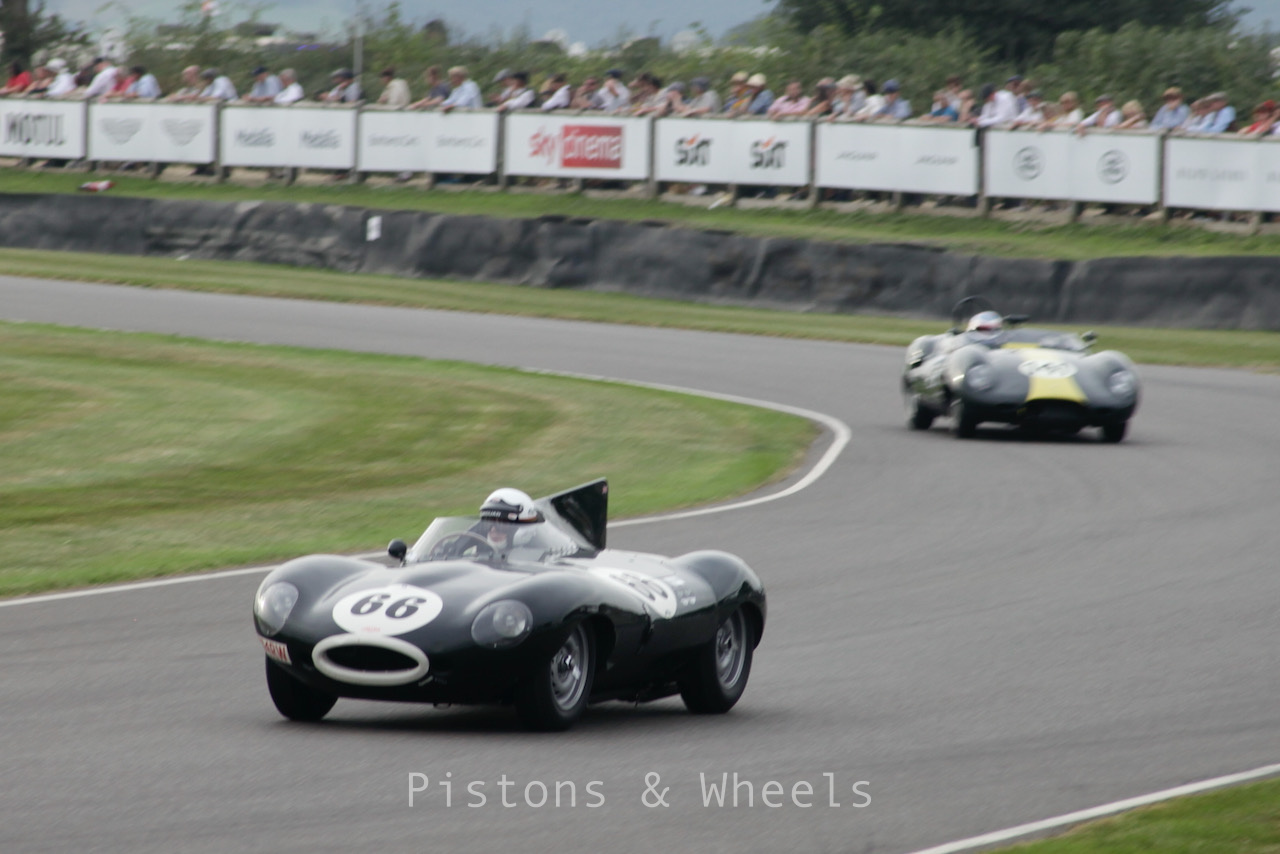
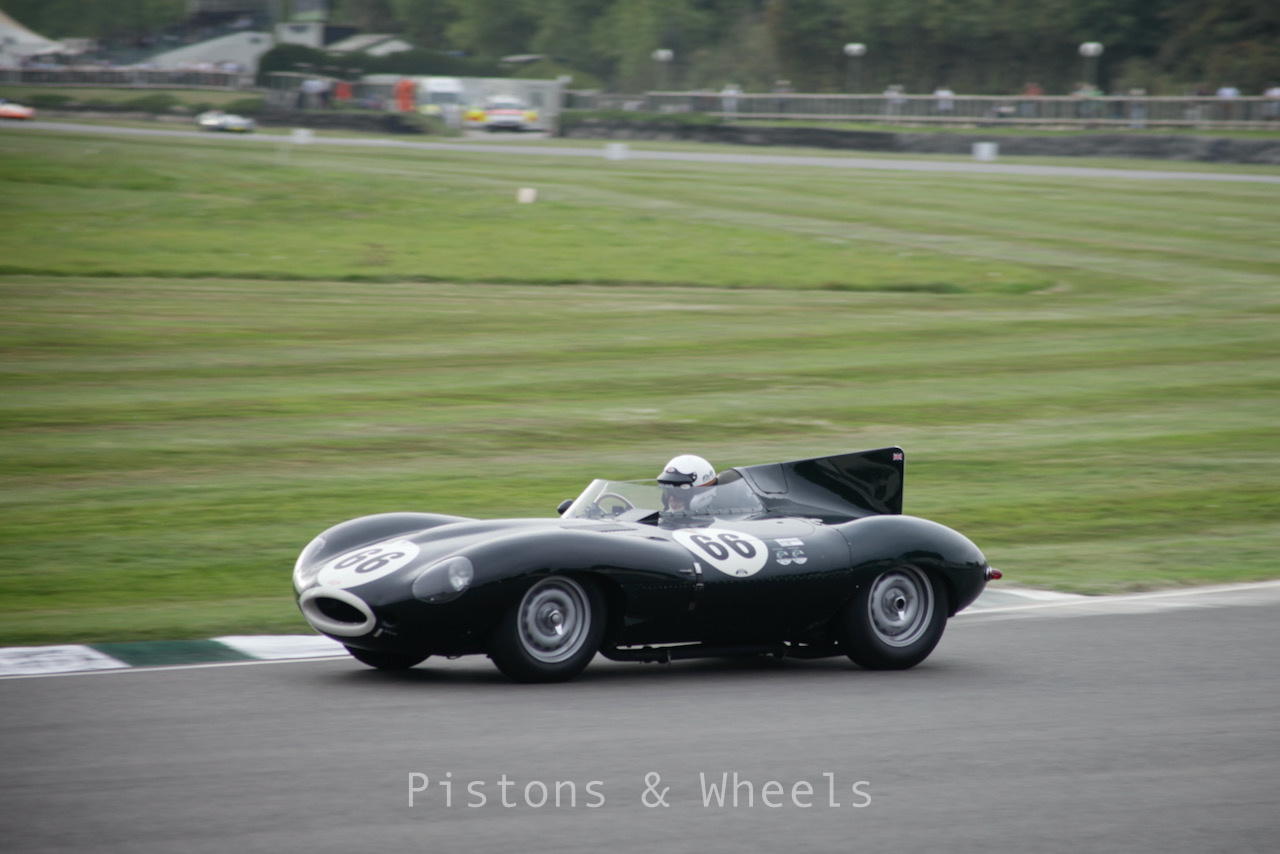
La voiture victorieuse, le châssis XKD505 en 1955 et aujourd’hui :

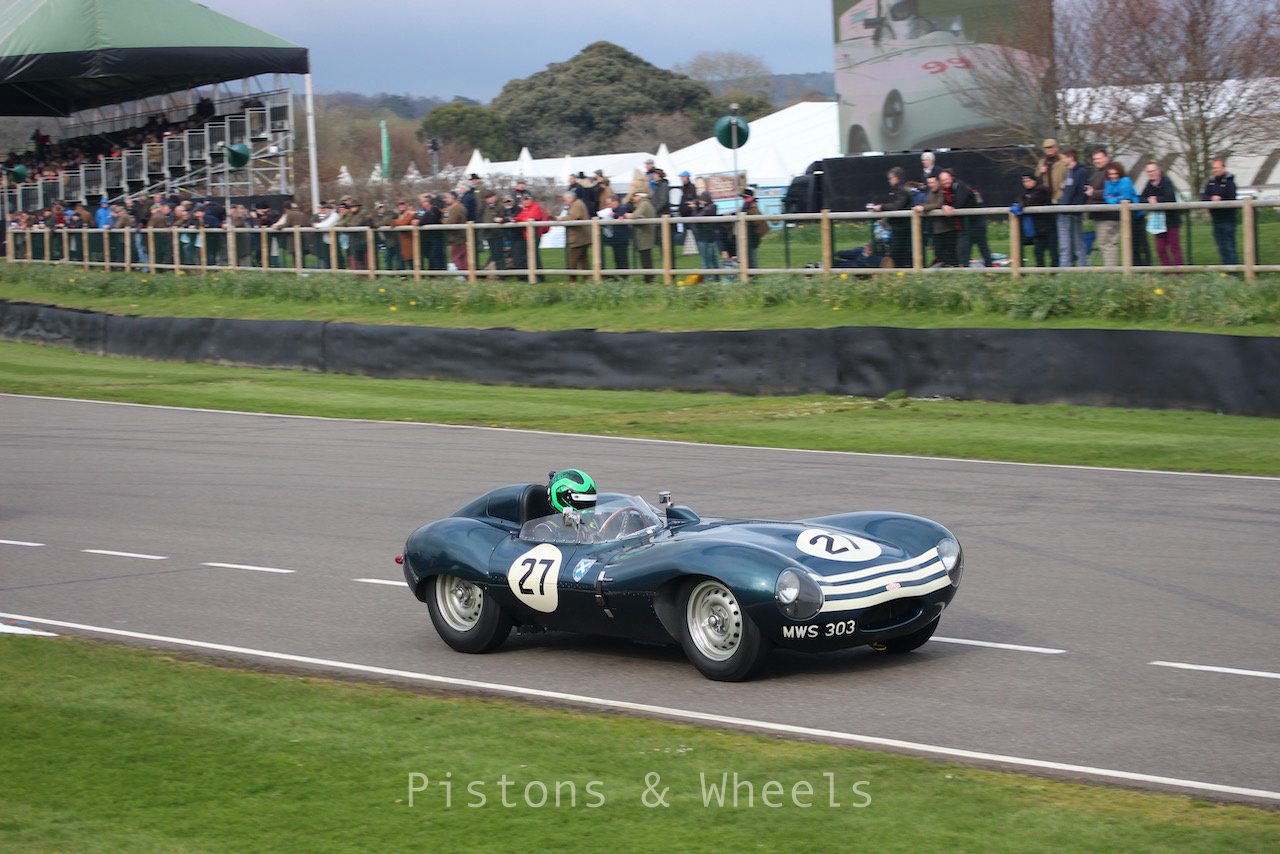
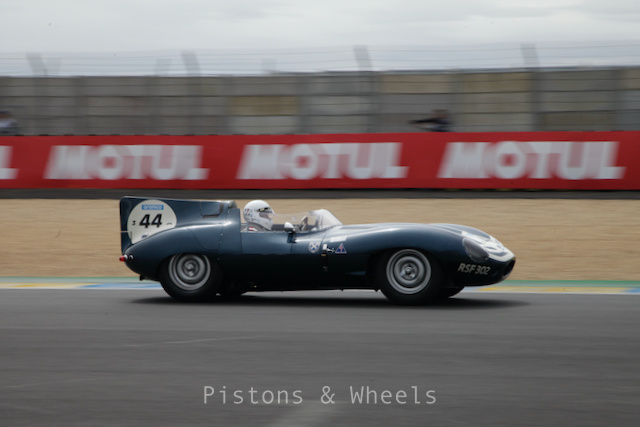
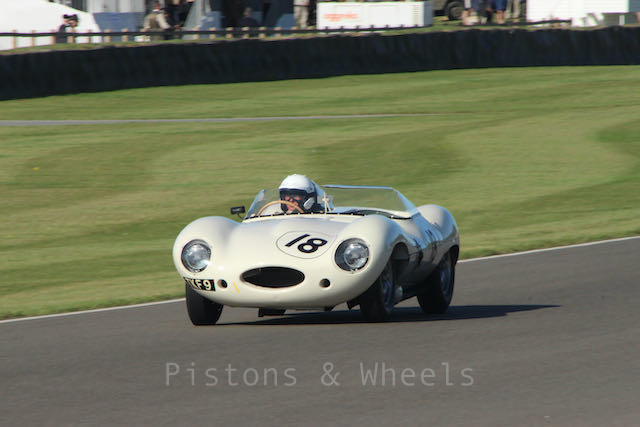
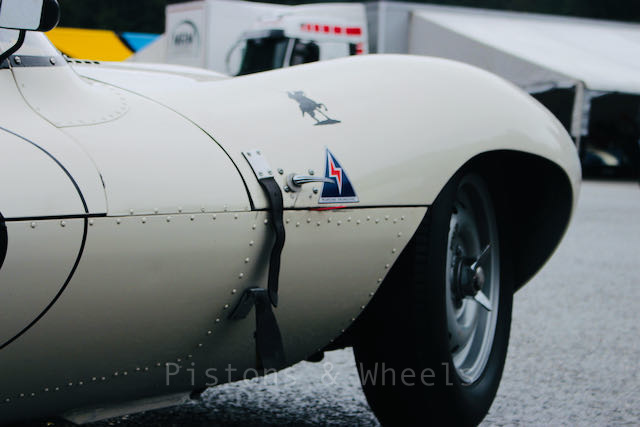
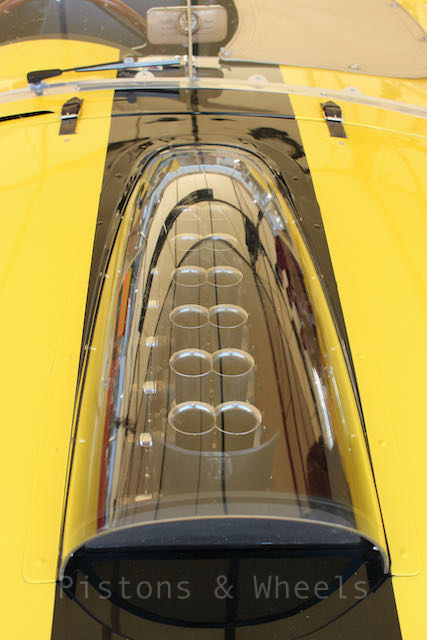
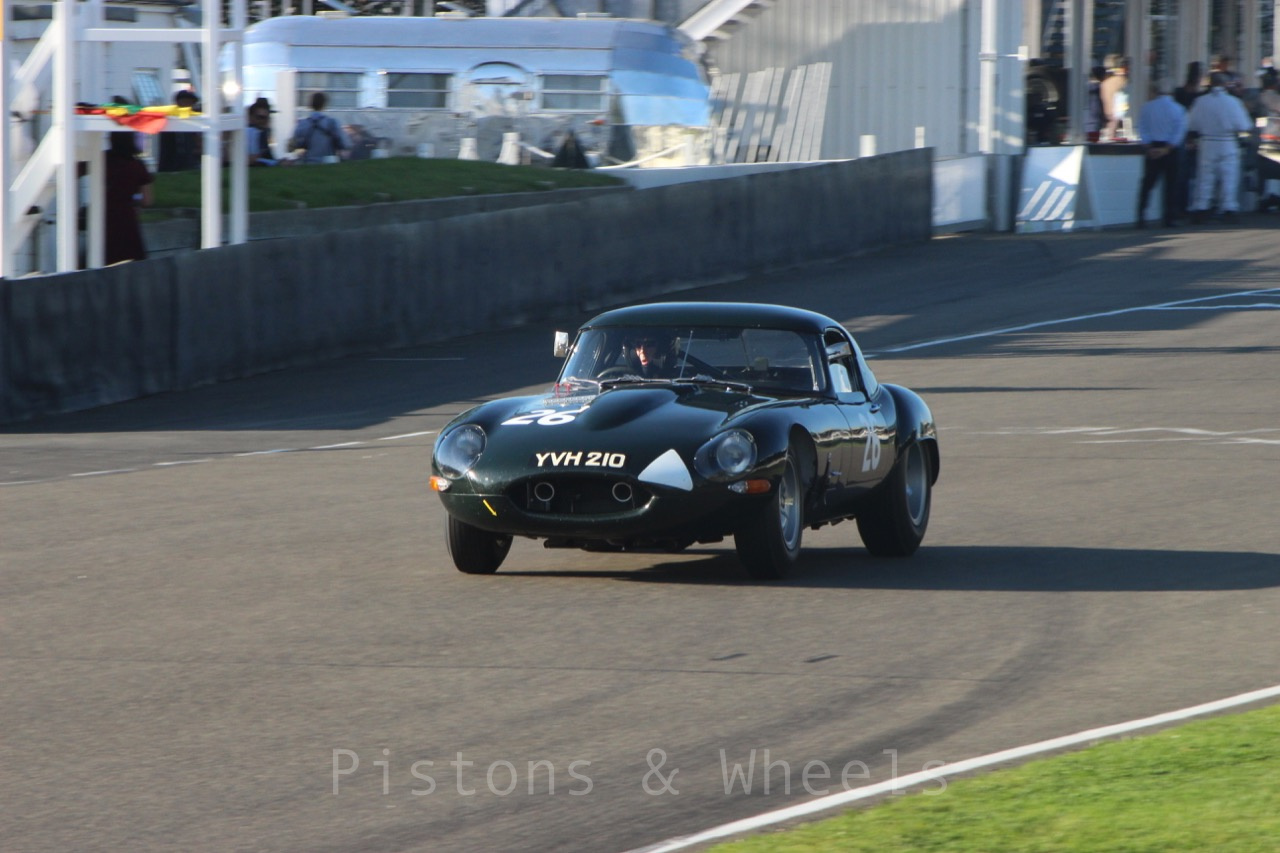
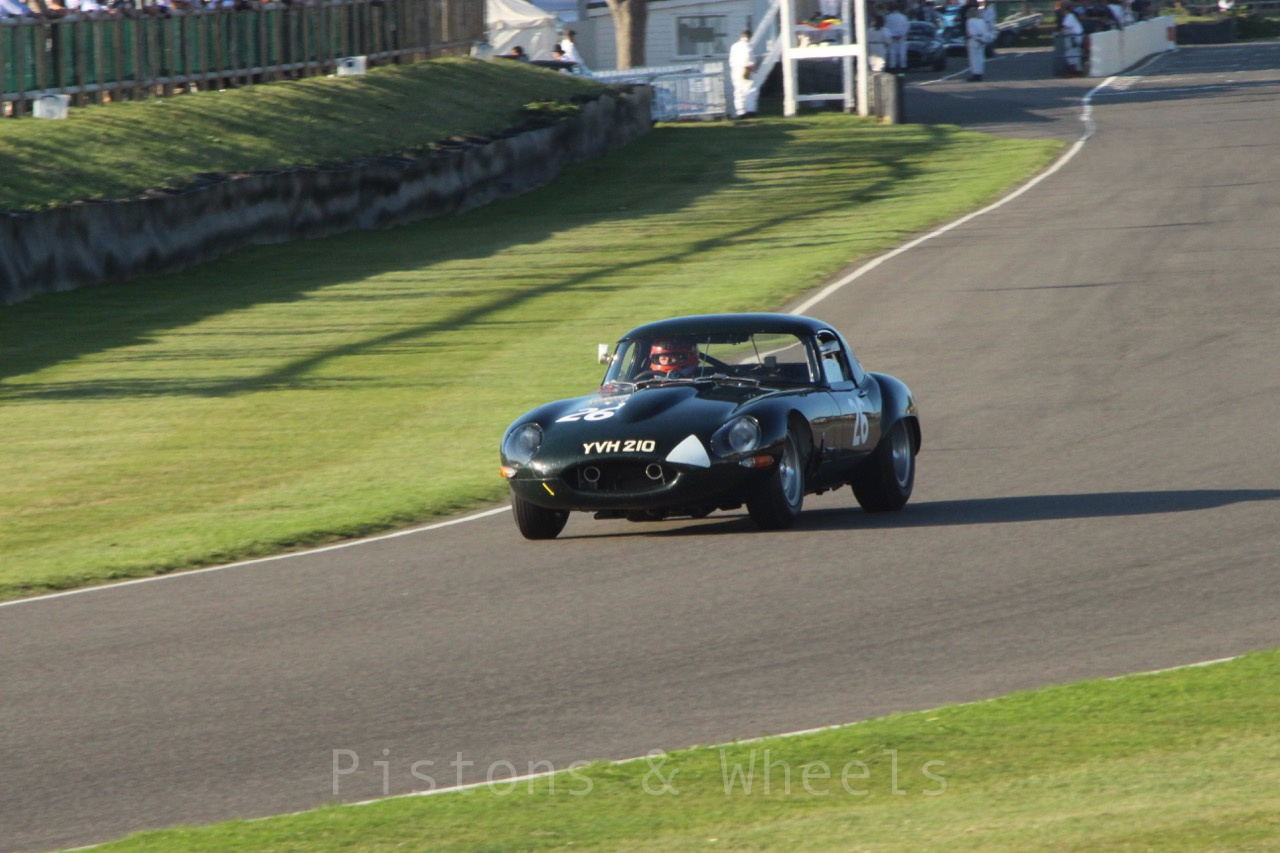
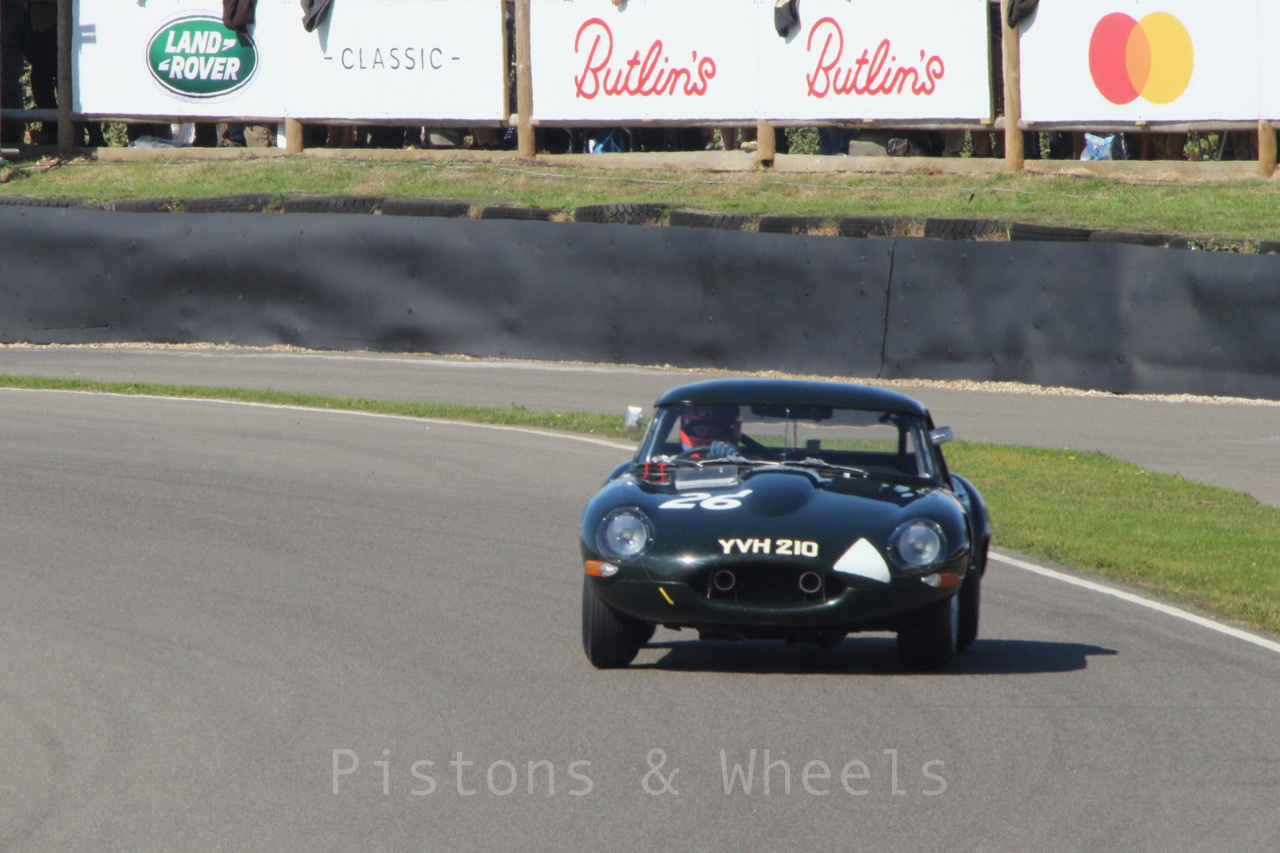
Vous trouverez beaucoup de photos de Jaguar Type-D sur le site http://www.pistonsandwheels.com dont voici quelques exemples. Il s’agit exclusivement d’authentiques Jaguar Type-D au num de châssis : XKD505 – XKD506 – XK517 – XKC543 – XKD558 et XKC561
Toute reproduction interdite sans l’autorisation de l’auteur – Reproduction prohibited without permission of the author

@waltheradriaensen – pistonsandwheels
Jaguar Type-C et les 24h du Mans

C’est en 1950 que William Lyons, fondateur de la marque Jaguar, décida de lancer la conception de la première voiture destinée uniquement à la compétition et plus spécialement au 24h du Mans.

La renommée de cette course était, à l’époque, bien plus importante qu’aujourd’hui.

Le championnat de F1 n’existait pas encore et une victoire sur le circuit français avait des répercutions directs sur les ventes. « Win on Sunday, sell on Monday ».

Pour l’édition de 1950, trois XK120 préparées prirent le départ sous la couverture d’un engagement privé, elles terminèrent avec une honorable 12ème place. Une des trois XK, celle pilotée par Johnson et Hadley est même montée à la 3ème place du classement pendant plus de la moitié de la course.
La conception de la Type-C fut très éloignée de celle de la XK120 malgré que son nom officiel fut 120C ce qui devait se révéler être une démarche commerciale en vue de booster les ventes du modèle XK120 suite aux résultats en compétition de la Type-C.

Son châssis est tubulaire et léger. C’est le célèbre moteur XK 3.4L, 6 cylindres en ligne de la XK120 développant 160 ch, qui une fois préparé pour la Type-C passera à 205 ch grâce à ses 2 carburateurs SU H8, à un arbre à cames « high lift », à une augmentation du diamètre des soupapes d’échappement et à une modification des ressorts de ces dernières. La suspension est améliorée et la direction se dote d’une crémaillère plus précise et directe.

La conception de sa carrosserie en aluminium est confiée à l’aérodynamicien Malcolm Sayer. Il va étudier une ligne révolutionnaire plus tirée et répondant à de nouvelles normes aérodynamiques.

Seul compromis exigé par William Lyons, l’ajout d’une calandre rappelant le modèle XK120 pour satisfaire l’orgueil des clients de son modèle de route.


C’est donc armé de ses 205 ch et de ses 940 kg que la Type-C prit la route en direction des 24h du Mans de 1951.

Jaguar se présenta avec trois voitures: les châssis XKC001, XKC002 et XKC003, sous les immatriculations : 153RW, 210RW et 032RW. Notons qu’à cette époque les voitures se rendaient en France par la route en convois…. élément difficile à imaginer de nos jours.
La concurrence était importante et principalement composée des Ferrari 340 America et 212, des Talbot Lago T26 et leur redoutable moteur de 4.5 l, des Cunningham et des Aston Martin DB2. Stirling Moss sur la XKC002 en tête dut abandonner au milieu de la nuit mais après le double tour d’horloge c’est la Jaguar Type-C XKC003 de Peter Walker et Peter Whitehead qui passa en première position sous le drapeau à damier après avoir parcouru plus de 3611 km.

Pour la saison 1952, une nouvelle carrosserie fut imaginée pour augmenter la vitesse dans l’interminable ligne droite des Hunaudieres qui n’était pas coupée par ses deux chicanes. Cette carrosserie fut montée sur les châssis XKC001, XKC002 et XKC011.
La concurrence était affûtée, en plus des Ferrari 340 America, des Aston DB3 spyder, des Cunningham et des Talbot-Lago, Mercedes revenait dans la Sarthe après 20 ans d’absence et ses 300 SL semblaient redoutables.

Les températures du mois de juin 1952 furent particulièrement élevées au Mans et la faible entrée d’air des nouveaux capots des Type-C provoqua l’abandon des voitures anglaise sur surchauffe, laissant la victoire au Mercedes 300SL.
Soulignons que lors de cette édition, Pierre Levegh conduisit plus de 16h sans s’arrêter au volant de la Talbot-Lago alors en tête de la course. Cet exploit prit fin par la rupture d’un boulon sur le vilebrequin à moins de deux heures de l’arrivée mais le pilote fut acclamé par la foule pour son exploit.

Pour les 24h du Mans 1953, la Type-C reçu des carburateurs Webber ainsi que des freins à disques développés par DUNLOP, ce qui était une véritable révolution. Les Jaguars atteignaient la vitesse de 245km/h, contre 250km/h pour les Cunningham mais grâce à leur système de freinage ils rattrapèrent le temps perdu. Mercedes n’était pas présent au 24h du Mans 1953 mais Alfa Romeo y alignait ses 6C/3000 CM, Ferrari ses 340MM, Cunningham ses C4 et C5 et Talbot-Lago ses T26.

Le début de la course fut incroyablement serré mais la nuit eut raison de la fiabilité des Alfa Roméo. Au levé du jour les Type-C occupaient les 1er, 2ème et 4ème place qu’elles ne devaient plus quitter.

1ère la Jaguar Type-C XKC051 N18 Rolt-Hamilton, 2ème la Jaguar Type-C XKC053 N17 Stirling Moss-Walker, 3ème la Cunningham de Walters-Fitch et 4ème la Jaguar Type-C XKC052 N19 Whitehead-Stewart.

Suite à cette victoire Jaguar décida de lancer les études de son nouveau modèle : la Jaguar Type-D qui représentera la marque au championnat du monde et au 24h du Mans de 1954 à 1957. Ceci fera le sujet d’un prochain article.


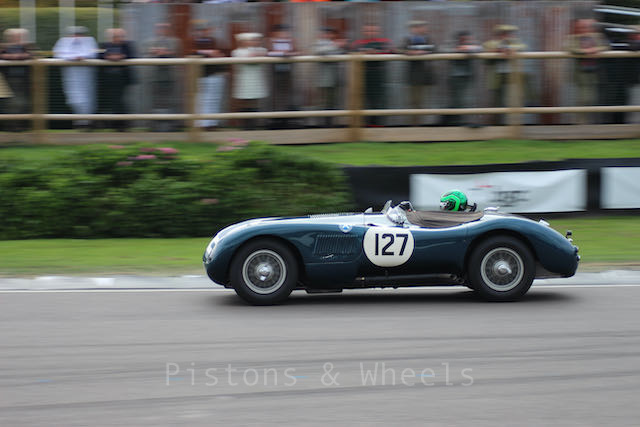
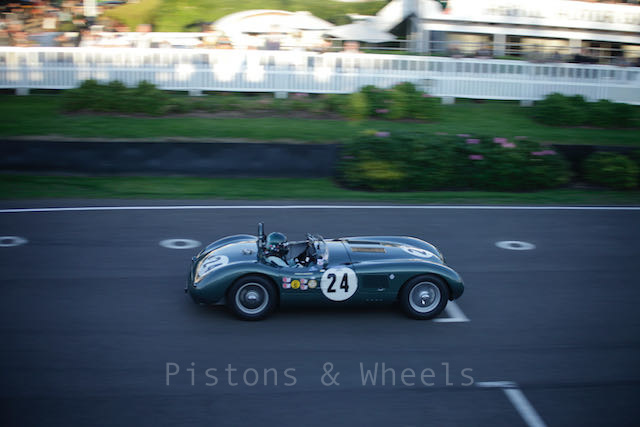
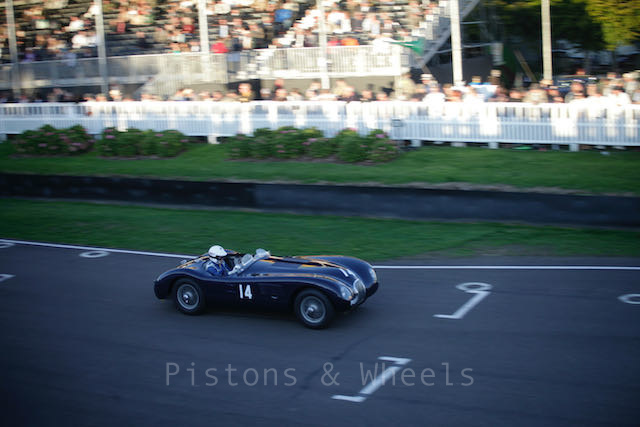
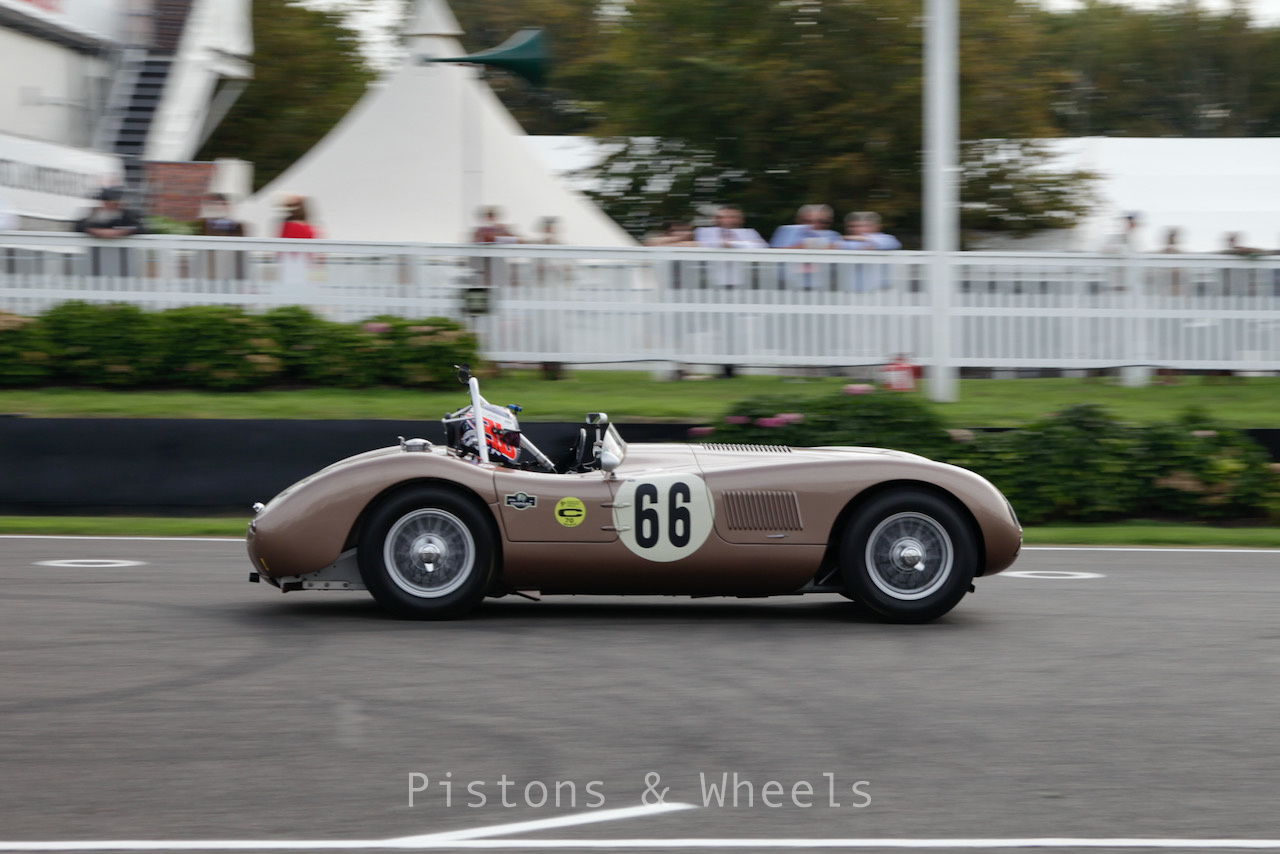
Vous trouverez beaucoup de photos de Jaguar C-Type sur le site http://www.pistonsandwheels.com dont voici quelques exemples. Il s’agit exclusivement d’authentiques Jaguar Type-C au num de châssis : XKC004 – XKC008 – XKC006 – XKC037 et XKC021.

Toute reproduction interdite sans l’autorisation de l’auteur – Reproduction prohibited without permission of the author

@waltheradriaensen

D-Type Jaguar TKF9 ex Jim Clark

Firts, excuse my english, I do my best for a little belgian guy.

Jim Clark is and will remain one of the biggest drivers that racing has ever known. His early career was tinged with lucky breaks coincidences and encounters

We are in 1956 and 20 year old Jim meets Ian Scott Watson, a speed enthusiast who owns a D.K.W.

One morning in June, Clark finds himself behind the wheel of this car on the Crimond circuit. During the tests, his time was better than that of Watson and by mutual agreement he participated in the race. The D.K.W finished the last race but Watson recognized the seed of champion.

In 1957 Watson created the Border Motor Racing Club and Jim Clark drove his first car over 100 hp, a Porsche 1600 S but for the future double world champion, the major meeting that would launch his career was to take place in early 1958: the Jaguar D Type TKF9.

The Scottish Border Reivers team, which had hired Jimmy Somervail as driver, asked him to drive their white Jaguar D Type for a few races.
In his own words, the experience gained by Jim Clark behind the wheel of this car was invaluable.
It should also be noted that it is thanks to the Scottish team Border Reivers that Jim Clark will have his first experience in a single-seater, on a Lotus Formula II. It was during a test drive of this car at Brands Hatch that he met Colin Chapman with whom he became twice world champion.

The Border Reivers bought the car through an ad in « Autosport ». The Jaguar had been prepared by the Murkett brothers for Archie Scott Brown and Henry Taylor.

Chassis: XKD517 – Engine: E2026-9, delivered to Henlys in Manchester in pastel green in 1956, wide windscreen covering two places.

The first TKF9 race in the hands of Jim Clark took place at Full Sutton Airport. A 5120m circuit, making it the longest circuit in England. Jim found the car incredibly fast and the engine extraordinary.

For the record, it was not exactly at the start of Full Sutton that Clark drove for the first time with D Type, but a few hours earlier. The engine of the transport truck having broken the day before the race, it was by road that the champion rallied York at the wheel of the Jaguar, thus covering more than 150 miles including a part at night. The next day Jim Clarck won the two races of Full Sutton and set the track record for a Sports car, exceeding the average 160km / h.

Following this, the Border Reivers registered D Type at Spa. (NB: in 1957 TKF9 had driven at Nurburgring and Spa, piloted by Henry Taylor and finished 3rd) Jim Clark was going to take the plunge and take the start alongside some of the biggest names of the time. Carrol Shelby and his Aston Martin DBR2, Olivier Gendebien and his Ferrari Testa Rossa, Master Gregory and his Lister Jaguar, Lucien Bianchi and his Ferrari or even Paul Frère and his Aston Martin DBR2.

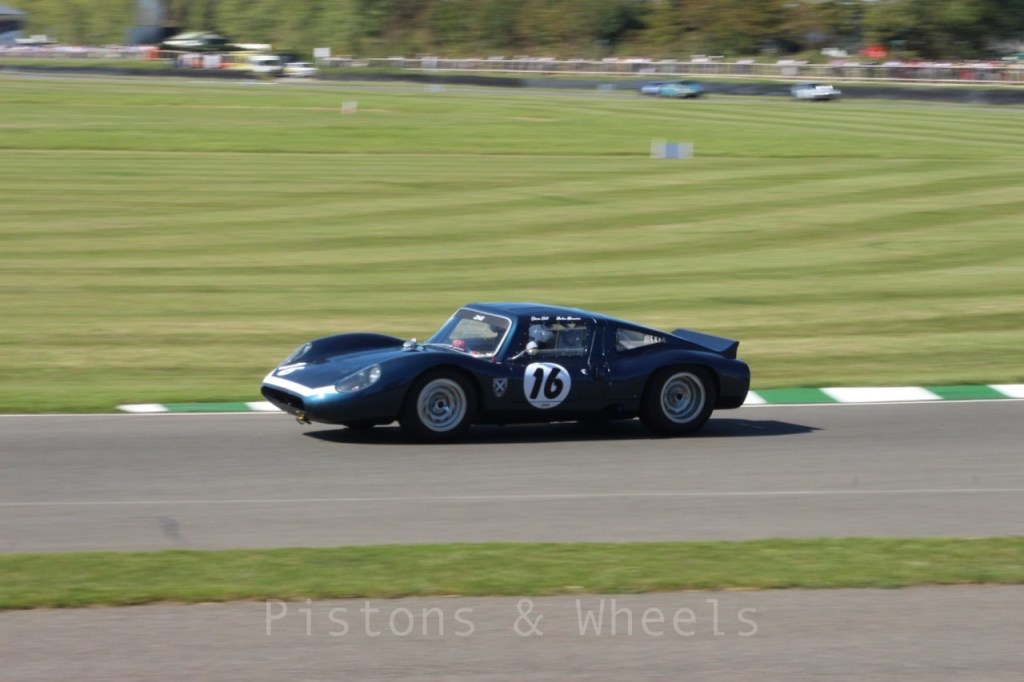
As an appetizer and in order to gain some experience on the 14km of the circuit, Clark participated in a side race in the morning driving a Porsche Carrera.

At 4:00 p.m. the main race was started. The D Type behaved valiantly against the powerful Lister and another Aston Martin and finished 8th.

This race will be the first contact of the future champion with the world of international competition. Unfortunately it will also be the theater of the death of Archie Scott Brown in the corner of the Club House. Jim Clark later admitted that he ran the entire race with an incredible stomach fear without ever daring to push D Type. Throughout his career as an F1 driver, he had very bad memories of the Spa circuit.

Back on his homeland, TKF9, still driven by Clark, will race two races at Full Sutton, three more at Chaperhall, one at Crimond and one at Brands Hatch.

Jim Clark ran 20 races behind the wheel of TKF9 and won 12.

The last race of the year on Chaperhall’s circuit was the most important for him. Ecurie Ecosse had entered Ron Flockhart on the winning Type D at Le Mans and Ines Ireland on the Toreiro-Jaguar. This race would prove to be a life-size test for the future Scottish champion. The Ecurie Ecosse D Type started with a definite advantage because the car was fitted with the latest Dunlop R.5 tires while TKF9 had the R.3 version. In addition, Flockhart’s car seems to be equipped with a 3.8 l engine while Jim Clark’s one has a 3.4 l one.

According to the testimony of the Scottish champion, this race allowed him to push the car to the limit of its potential. Exploit that he had not dared to achieve on the Spa Francorchamps circuit a few months earlier. Finally after a tight race and numerous overtaking, TKF9 finished second behind the D Type of Ecurie Ecosse and proved to the future F1 driver that he could fight with great champions.

The car was subsequently sold to Alan Ensoll and was replaced in the stable by ex-Bruce Halford Lister Jaguar in 1959.

Alan Ensoll will drive the car in numerous hill climbs, notably Barbon, Catterick and Castle Howard. He transformed it into XKSS and had it painted green.

In 1960, the car will be one of the stars of the film « The Green Helmet » by Michael Forlong.

An Irish fan by the name of Bob Duncan, who discovered the car in the film, brought it to Ireland and raced it in the Hillant races of Craigantlet and Kirkistown.
Then, back in England, she joined the Corser collection for 14 years. The car was then repainted in dark green, like all the other Jaguars in the impressive collection and was fully checked by Jaguar.

In 1978 it was bought by the American collector …. but who decided a few months later not to keep it. That’s when Willie Tuckett becomes the proud owner.

The car will be damaged in the 80s, it will then be completely rebuilt by Martin Morris in its 1958 Border Reivers specification.

The car today:

Sources : Jaguar Scapbook – Philip Porter, Jim Clarck par Jim Clarck – Marabout Flash – Motorsport magazine – Jim Clark de Graham Gauld

Toute reproduction interdite sans l’autorisation de l’auteur – Reproduction prohibited without permission of the author

@waltheradriaensen pistonsandwheels

Tojeiro EE Coupé

Please excuse my english, we do our best…..

There are less than 50 years in England, dreams could become reality. It was the time of the « garage owners » as Enzo Ferrari liked to call them. The time for Cooper Chapman, of Tojeiro, Lister and many other yet. If you had talent, a good engine, ambition, and some money, you would build your own car.

John Tojeiro was one of these men. A man who decides to create his chassis and make his racing cars.

There are only a few Tojeiro and only two coupés. Both cars were designed to run 24 hours of Le Mans 1962 under the colors of the Ecurie Ecosse, but the fate of these frames was very different.

Born in Estoril in 1923 of a Portuguese father and an English mother, John Tojeiro is interested very quickly to the car. On the death of his father he finds himself in England where he then met Brian Lister at Persia School in Cambridge. Lister will be one of his first clients and will also become one of its most talented competitor.

In 1942 he joined the Fleet Air Arm and work on aircraft structures.

At 22, John Tojeiro was demobilized and left the Fleet Ari Am armed with simple engineering basics. He created a small business in a garage Arrigton and built his first frame in order to participate in some national races. To do so, he carefully analyzed a Cooper Mg belonging to his friend Brian Lister and was inspired by it to create his first car. The work was neat and ingenious and quickly his reputation began to spread in the middle of the English automobile.

In 1953 he worked on AC Ace, which was the first British sports car to offer a fully independent suspension. He designs the entire car frame, a frame based on two tubes of large diameter with sub-front and rear frames to maintain the transverse leaf spring and wishbone suspension. The engine mounted in the car at the time was a six-cylinder 2-liter. (Motor to be replaced the following year)

In 1957 Tojeiro form the Tojeiro Car Company and are produced with 4 cars Jaguar engines with the help of Cavendish for aerodynamics and bodywork. (These cars will be the subject of a future article)

But let’s talk about our 2 Coupés.

In 1962 on the order of 2 cars by David Murray for the Ecurie Ecosse Tojeiro proposes using the concept of frame of his Formula Junior. Chassis that once strengthened may be a good basis for the new coupe.

The body will be entrusted to Cavendish Morton who had worked previously with Tojeiro especially on special AC who participated in the 24h of Le Mans 1958. The engines, when with them, will be Climax.
The time is missing and the Ecurie Ecosse sent his best mechanic Senior Stan Sproat, to work on both cars. The body design also put many problems and finally despite foreign aid, a single car will be finished in time to be present at the Le Mans 24 Hours.

It is then decided that the two cars will be on the trip, the second car will serve as a spare part for if necessary.

Only the Tuesday before the race that the Ecurie Ecosse transporter took the road. The cars were not even painted, the paint material was embedded in the carrier to carry out this work once arrived in the Sarthe.

But despite this late arrival the car passed the pre-race tests and validated its participation in the 24h of Le Mans.

From the start the car, driven by Dickson and Fairman, proved to be very fast and its performance in the straight line of Hunaudière had nothing to envy to the other competitors in its class, the 2500cc prototype cars.

But after 8 hours of racing the Cooper gearbox broke, forcing the car to pull over to the side of the track, watching the competitors finish the race.

Once back in Scotland, the car was prepared for the international race of the « 50 laps Guards Trophy Augus » t at Brands Hatch, which took place in heavy rain. Unfortunately Jack Fairman, the driver lost control of the car and off the track.

To save the season, David Mvurray decided to put the car in the speed record at the Monza circuit.

Drived by Jack Fairman everything went smoothly again but the attempt had to be cut short when an oil pipe broke and forced the car to return to the pits. Small consolation, despite the 100KM could not be completed, the record of 152 mph (244km / h) was the highest speed ever achieved by such a car on the Pista de Alta Velocita.

In 1963, the V8 alloy engine produced by General Motors attracted David Murray who wanted to install it in his cars. Note that he was not innovative in the matter because the same engine was used by Bruce McLaren and Teddy Mayer for their very young McLaren car.

For financial reasons, only one Buick V8 engine block and one Corvair transmission could be acquired by the team and Stan Sproat took care of the gearbox / engine transformations of the car. Once adjusted the engine was going to develop 228 hp.

For the 1963 season, the 2 Tojeiro EE Coupés, one with a climax engine, the other with the Buick, will participate in club and national races only. To do David Murray hired the promising young brother of former driver Jimmy Stewart team, Jackie. Doug Graham would also be considered a pilot team..

Jackie Stewart won a race and finished second in another at Charterhall. But in July at Snetterton, the car was crashed by Doug Graham. Meanwhile the car FP-Climax engine ex-Le Mans was also converted into a Buick V8. This car finish, led by Tommy Dickson, fourth in a race on the Ouston airfield. Later in the season yet Jackie Stewart won a race at the Snetterton circuit, the talent of the young driver emerged race after race.

In 1964, the cars continued their harvest. Jackie Stewart finished 3rd at Brands Hatch and 6th at Silverstone. John Coundley also drove the car at Brands Hatch in October and finished 2nd.

In 1966, one of the two Tojeiro EE-Ford Coupé was transformed into a spyder, the roof was removed and sold to the manufacturer, Jack Fisher, who adapted it to his Fisher Special.

The car, driven by Bill Stein, behaved very well at Silverstone and then took part in the race at Brands Hatch, where his driver was very lucky to survive a horrific crash at the bottom of Paddock Hill.

Since then the car has been completely dismantled and entrusted to the main specialists in restoration Crosthwaite & Gardiner. They rebuilt and reinforced the multi-tubular chassis, and rebuilt the car as a whole by incorporating its original roof.

Important detail, the Tojeiro EE Coupé is undoubtedly the first GT prototype with rear engine. Preceding the Lola Mk6 by an entire year. Lola which will give birth to the GT40. A real feat for such a small team.

Here is EE1 1962 Tojeiro EE-Ford Endurance Racing Coupe Chassis no. TAD-1-64

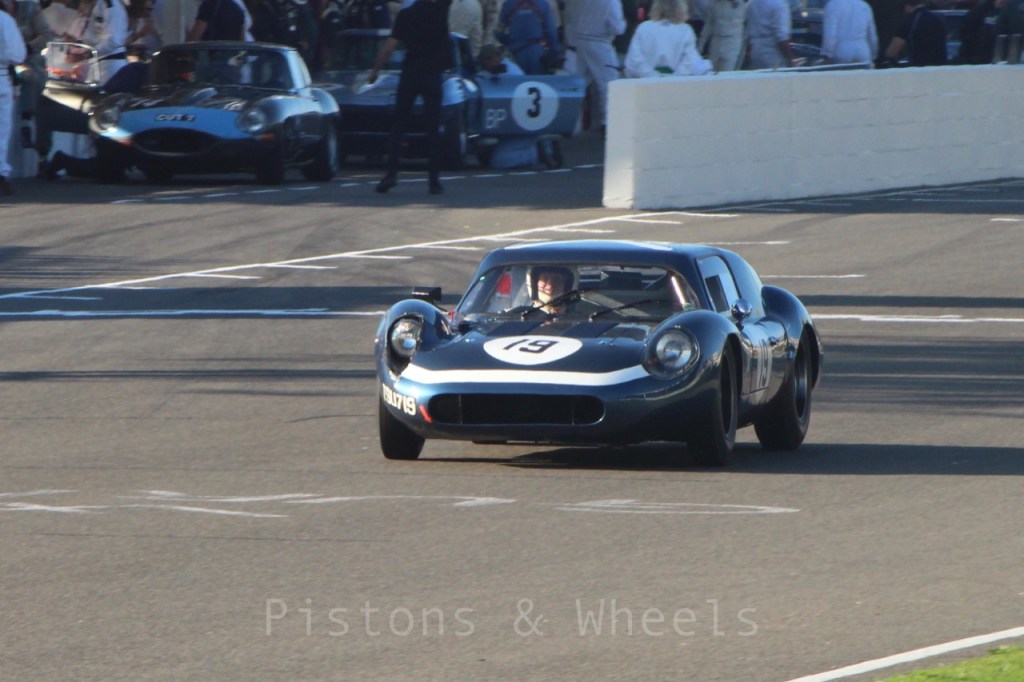
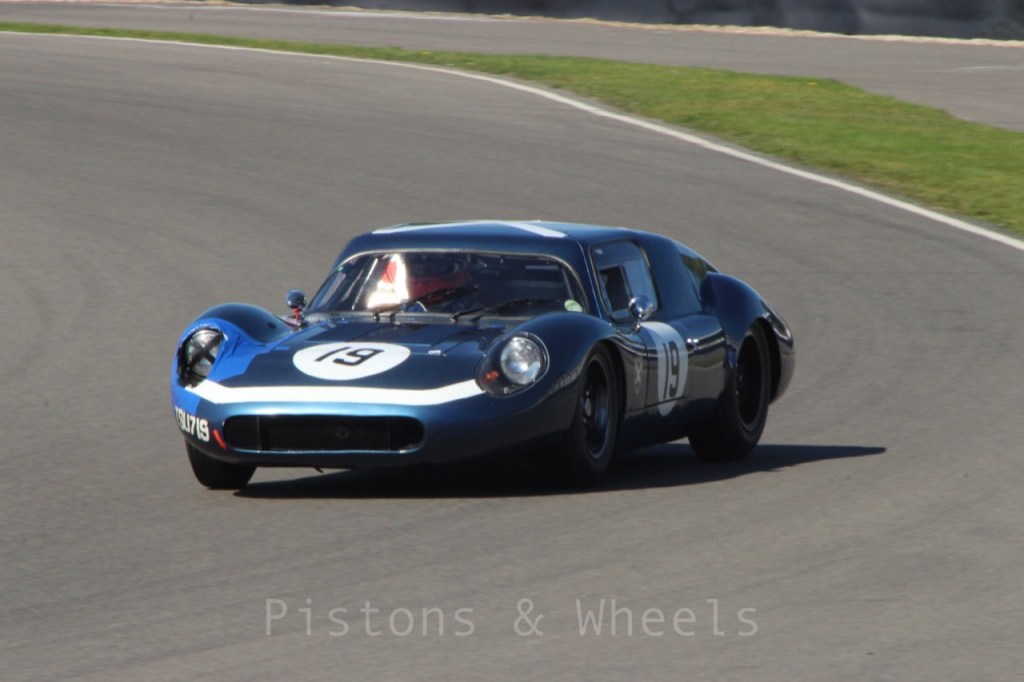
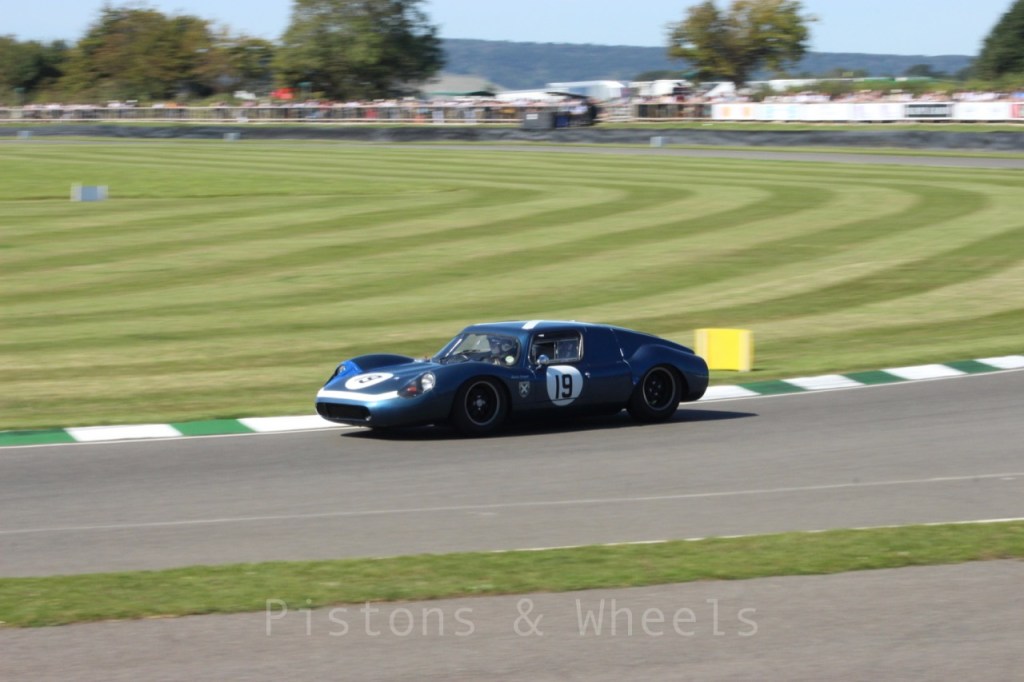
Here is EE2 1962 Tojeiro EE-Buick Endurance Racing Coupe TAD-4-62/EE-2 TSU719

Toute reproduction interdite sans l’autorisation de l’auteur – Reproduction prohibited without permission of the author

@waltheradriaensen pistonsandwheels

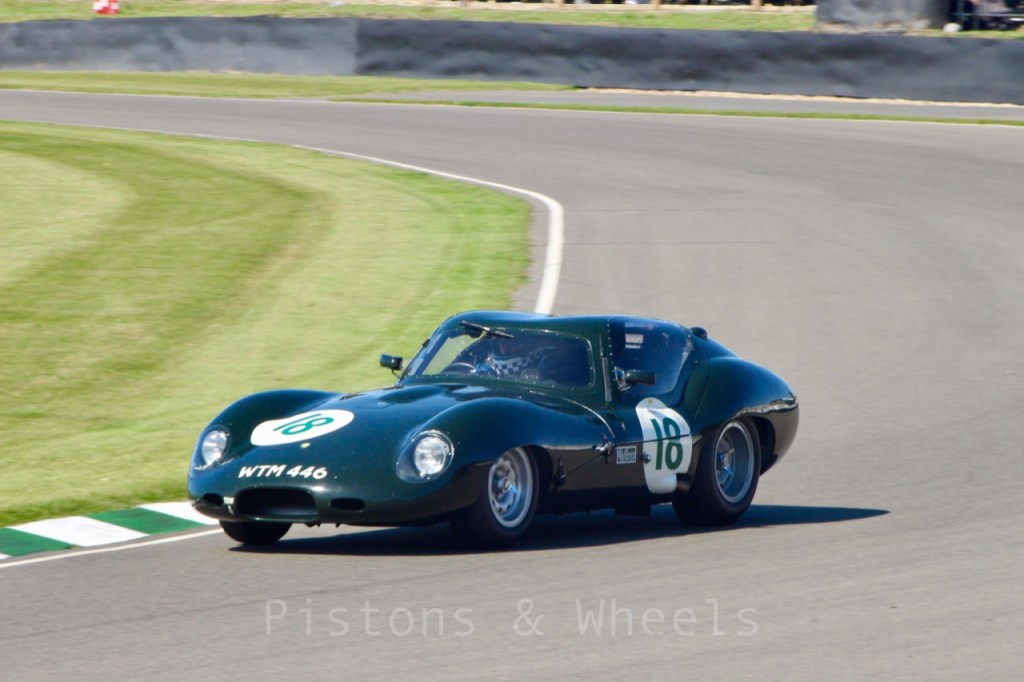
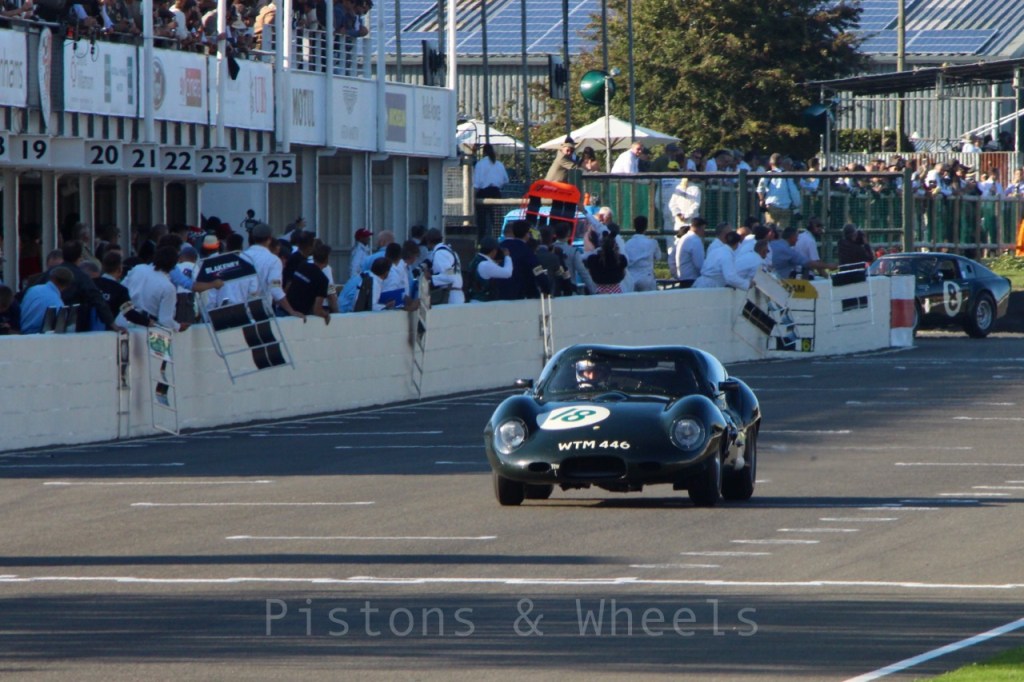
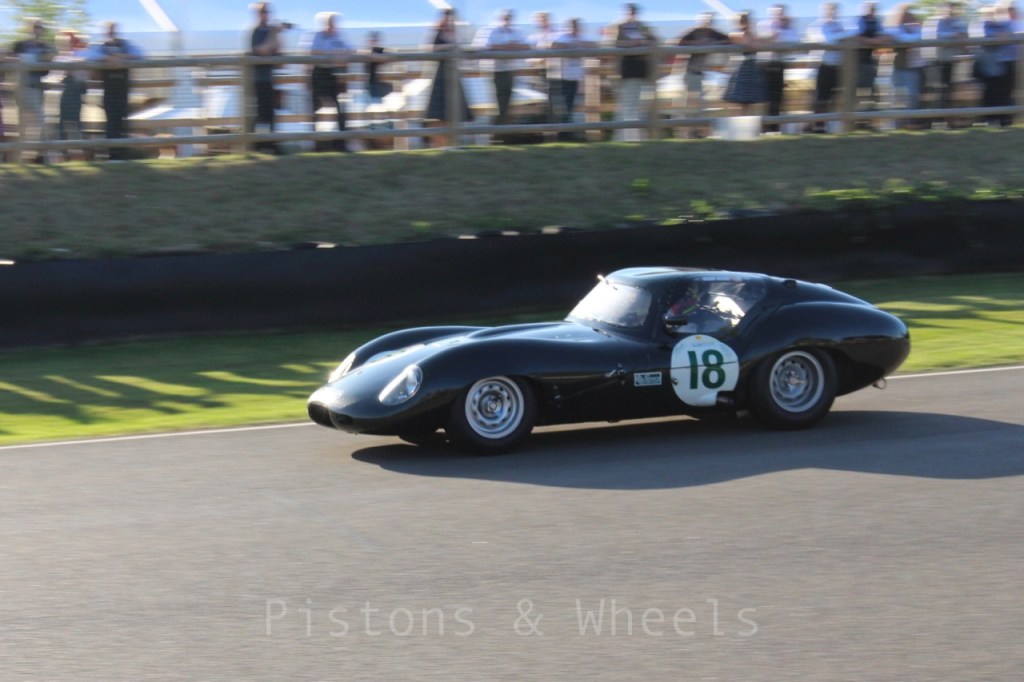
The Lister Costin Coupe WTM446

Please excuse my english, we do our best…..

Each Lister car is special but some of them are even more exceptional. This is the case of HCH736 whose story will be illustrated in a future article and also of WTM446, the only Lister Coupé.

The cars of the Lister brand have never been produced in large quantities but the Lister Costin Coupé is special because, WTM446 is unique.

Brian Lister created the Lister brand in 1954 in Cambridge. He worked on the design of a chassis, which will be tubular and wide enough, allowing the pilot a low position.

At first the cars will be equipped with the MG engine 1500cc without great success. He then installed a Bristol 2 liter engine.
The Lister Bristol will win several victories including Silverstone in a car driven by Archie Scott Brown, a driver who will remain intimately linked to the brand.

In 1956, Brian Lister replaced the Bristol engine with the Maserati A6GCS one.

The Great Lister era began in 1957, with Jaguar having retired from competition in late 1956, the Type-D engine was going to be available for private and independent builders. The famous 3785cc in-line 6cylinder with 3 Webber carburettors would be widely used in competition by many English manufacturers.

The aluminum body fitted with the Jaguar engine makes the Lister a formidable car capable of reaching 100 miles in 11s2.

Scott Brown won 11 of 13 races in which he participated.

In 1957 the car is further improved, and will carry a new bodywork that will be known as Knobbly. Which can result in « bumpy » nickname related to the multiple curves of the car.
The Lister Knobbly will won many races, beating big names such as Ferrari and Aston Martin on many circuits, unfortunately the story of Lister will be mourned that year by the fatal accident of Scott Brown at Spa Francorchamps.

In 1958, in order to gain top speed, a key element for a victory at Le Mans in the Mulsanne straight line, Brian Lister hired Franck Costin, a renowned aerodynamian, who had previously worked on the Lotus Mark VIII.
Franck Costin drew on a new bodywork and, with an identical engine from the Knobbly, the car will gain 45km / h in top speed.

Nine copies will be built, two lister Costin were equipped with the Jaguar engine and seven of the Chevrolet one.

In 1963 Peter Sargent and Peter Lumsden, will buy the Lister made in 1959 for Jim Diggory.

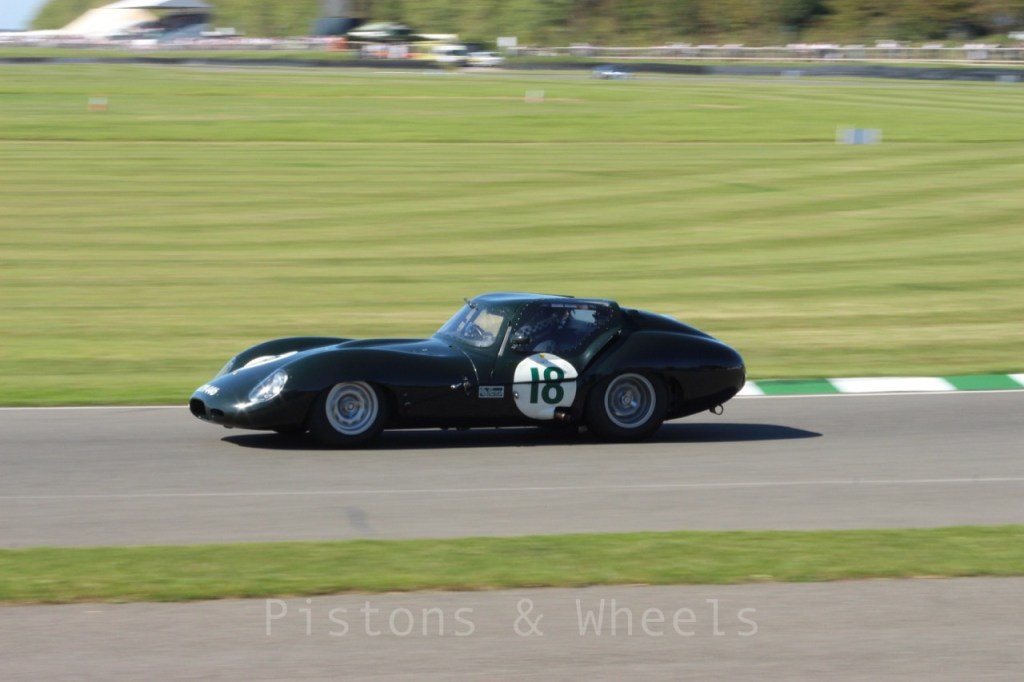
This car had a « spaceframe » chassis with multitubular trellis and ordered a special study at Playfords based in London for a model « Coupe » to participate in the 24h of Le Mans in 1963.

The front suspension will be a double wishbones, coil springs over telescopic shock absorbers. The rear one DeDion axle, twin trailing arms, coil springs over telescopic shock absorbers. The wheels will be Dunlop Magnesium 16 inches.

The car only weighed 1,105 kilo / 2,436 lbs for 306 bhp / 228 kW @ 5,500 rpm, 0 to 60 miles/h in 4,9 sec.

This car, WTM446, which will remain a unique model, will be extremely fast up to 275km / h.

Unfortunately the success will not be there and despite exceptional performance, a broken engine prevented WTM446 from shinning during the race.

After three hours of racing, where the car was very fast, the clutch bolts broke. Bolts provided by Jaguar but did not seem to be up to standard. Complaints that made controversy at the time.The car also participated in the 1000km Nürburgring led by Joachim Fairman. Again the car was extremely fast before the break of its rear suspension.

The same car today

Toute reproduction interdite sans l’autorisation de l’auteur – Reproduction prohibited without permission of the author

@waltheradriaensen pistonsandwheels
Ferrari chassis #0606 290MM

Please excuse my english, we do our best…..

Another chassis with a particular history. A Ferrari that has experienced many twists on the circuits and in the garages of enthusiasts.


The model 290MM was produced in 4 copies in 1956 by the Maranello factories in order to participate in the Mille Miglia. They were powered by a V12 60 ° 3.5 l developing 320 hp up to the speed of 280 km / h.

The car completed its mission successfully and Castellotti won the race, Fangio, on his own, finished the Italian race in 4th place.
The chassis # 0606 won the GP of Sweden under the color of the factory in 1956 driven by Hill and Trintignant

In 1957 the car ran under the colors of the Belgian team, Francorchamps. Jacques Swaters drove the car to Spa and the 24h of Le Mans, where she gave up. Willy Mairesse at RACB GP de Spa and Silverstone where the car finished 5th.

In 1958 the car is returned to the factory where it will serve as a test car.
In 1959, # 0606 is equipped with a V12 « Colombo » engine of the Testa Rossa type and is then sold, painted yellow to a Brazilian buyer.

During the 1960, 1961 and 1962 seasons the car participated in many races on the South American continent in this configuration. Unfortunately during the 500km of Interlagos, the car is the victim of a serious accident and the pilot Rio Négri dies. The car is destroyed, literally cut in half.

The saved part of the car is then used in local races equipped with a V8 engine.

In 1986, an English buyer bought the car, thinking to buy the chassis # 0726, chassis of a 250 TR also seriously damaged. After an heavy renovation the car is rebuilt as such.

In 1991, the car is resold and the new owner makes a deeper search and finds that it is the chassis # 0606 and that the car was, by mistake, rebuilt in # 0726. Unfortunately this buyer dies but the new owner of the car decides to continue the research work and put back the car in the configuration where she left the factory in 1959.

After 4 years of work, the car is finished and wears the colors of the « Escuria Lagartixa », as during races on the South American continent of the early 60s.

The car today on Goodwood circuit :

Toute reproduction interdite sans l’autorisation de l’auteur – Reproduction prohibited without permission of the author

@waltheradriaensen pistonsandwheels
Jaguar E Type Lightweight and…

Please excuse my english, we do our best…..

Talking about E Type lightweight is as complex as talking about contemporary art. When the period begins, what is art, what did the artist want to express, etc..

As for E Type, the big question is: what is a lightweight? Everyone agrees on one point: 12 lightweights have left the factories. It’s a good start. Although the Jaguar plant only had more direct involvement in a racing stable following the victories of the C and D Type, she wished nonetheless offer a sharp weapon to private teams.

So apart from the 12 lightweight, there were semi-lightweight … then semi-lightweight converted to lightweight, then heavyweight converted to lightweight at the time and finally the E Type Gt currently transformed into semi lightweight.

In addition, except for the 12 original lightweight chassis, engine specifications of some cars do not always seem to coincide in function sources and documents.

To summarize the lightweight is integrally made of aluminum, this including the monocoque. The semi-lightweight has a steel monocoque and jail and the other parts of the body are made of aluminum (hoods, trunks, doors, hard top). The mechanical transformations of these are « a la carte » and differ from one chassis to another.

The 12 lightweight were built by Jaguar Competition to fight against the Ferrari 250 GTO and the Aston Martin DB4 GT Zagato. These cars are roadsters which, thanks to the aluminum panel bodywork and the removal of chrome and other accessories, are going to be 115 kilos lighter than a conventional E type. (Heavyweight)

Their engine block, from the 3.8l, was also made of aluminum. Note that the latter proved too fragile and caused many dropouts, it will be replaced by a cast iron block developing 300 hp. (against 265 hp for the basic E Type). This engine has a typical ‘wide angle’ cylinder head like the D Type three Weber carburetors 45DCO3 and a box of race speed 4-speed complete the picture. Note that at the end of their career some E Type lightweight opted for a 5-speed ZF gearbox.

The lightweight integrated the rear suspension of the improved MK X, Dunlop special alloy rims, a low rack and of course the latest generation disc brakes.

Of the 12 cars, 2 will be transformed into low-drag.

Note: There is currently a 3rd Low-Drag, registered CUT7 but it was created on a basic jaguar heavy-weight. This work was carried out at the factory which gives this car a very specific specificity.

To date I could cross 3 lightweight E-Type original. Here is their historical and some photos of these cars then and today.


YVH210 #S850666 ex Peter Sutcliffe

This lightweight E-Type is considered the most successful E Type still existing.

S850666 is the ninth E Type lightweight car built by Jaguar Competition. English driver Peter Sutcliffe bought it in 1963 and competed in the Mallory Park race « Whit-Monday », where he finished 5th in the Grovewood Trophy.

He piloted YVH210 at Snetterton, at the British Grand Prix at Silverstone and at Goodwood where he finished in 2nd place behind Jackie Stewart. He also raced the 3 hours of Snetterton where he also finished 5th behind two Ferrari 250 GTOs and the low-drag driven by Dick Protheroe.

In 1964, YVH210 participated in more international races. She finished 2nd in the 500 km from Spa behind the Cobra by Bob Bonduran and won the Prix de Paris disputed on the Montlhery circuit. She also competed in the 1000 Km of Nurburgring, the 12 hrs of Reims and Zolder where he beat the GTO.

To end the 1964 season, the car also participated in the RAC Tourist Trophy at Goodwood, Brands Hatch and the Autosport 3 Hours in Snetterton.

For the winter season the car was sent to the southern hemisphere, where she ran the Kyalami 9 Hours of. (3rd of the general and 1st of their category). The car, driven always by Peter Sutcliffe, ran in Bulawayo in Rhodesia where she finished 2nd and back to Kyalami to compete in the rally Rand Grand Prix where she finished second also.

For the 1965 season, back in England, YVH210 was sold to Charkes Bridges of the Red Ros Racing Team, which had already acquired the Lightweight ex-John Coombs (4WPD – # S850006).

On English soil the car participated in 9 national races, it won one and finished 2nd twice.

In 1967 the car was sold to Bob Vincent with whom she participated in many hill races at Castle Howard, Woburn, Prescott where the car won frequently.

The car today :


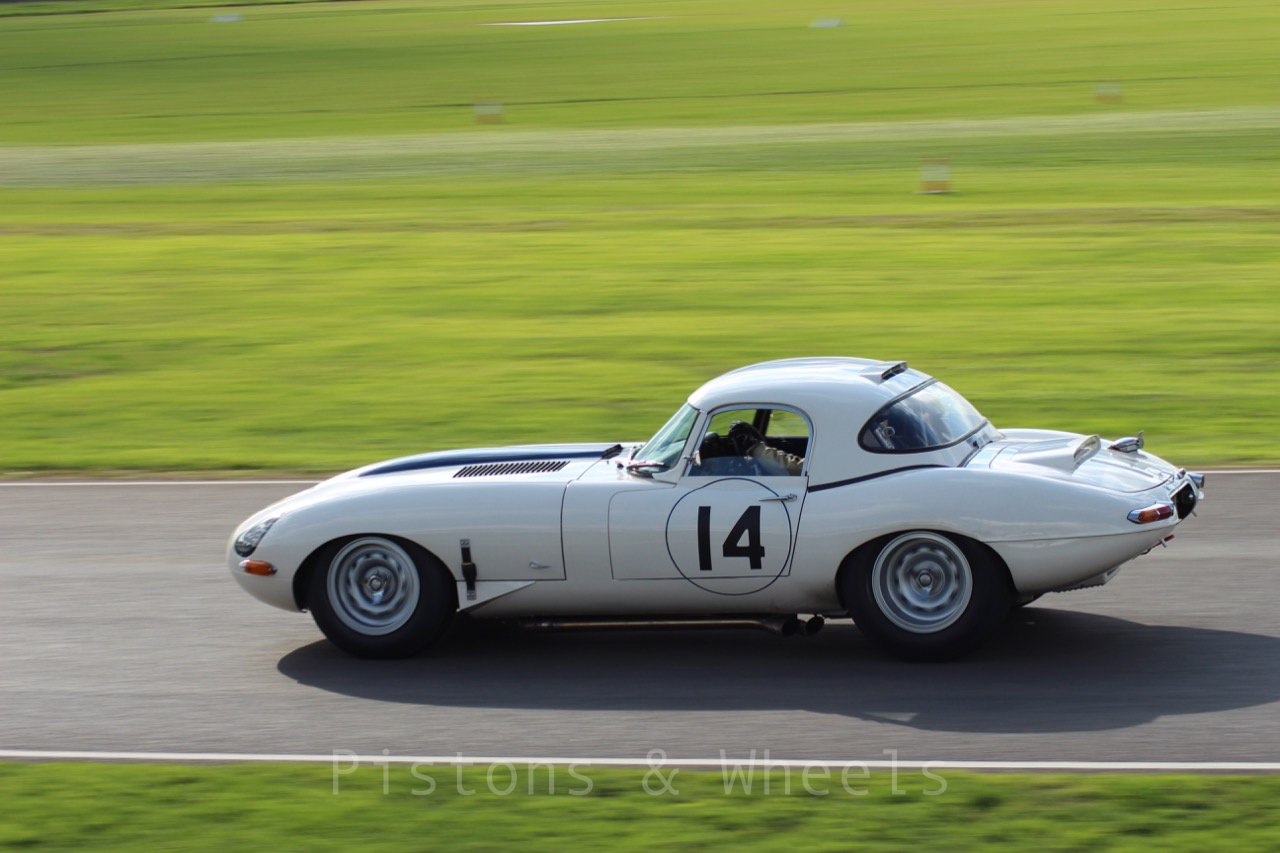
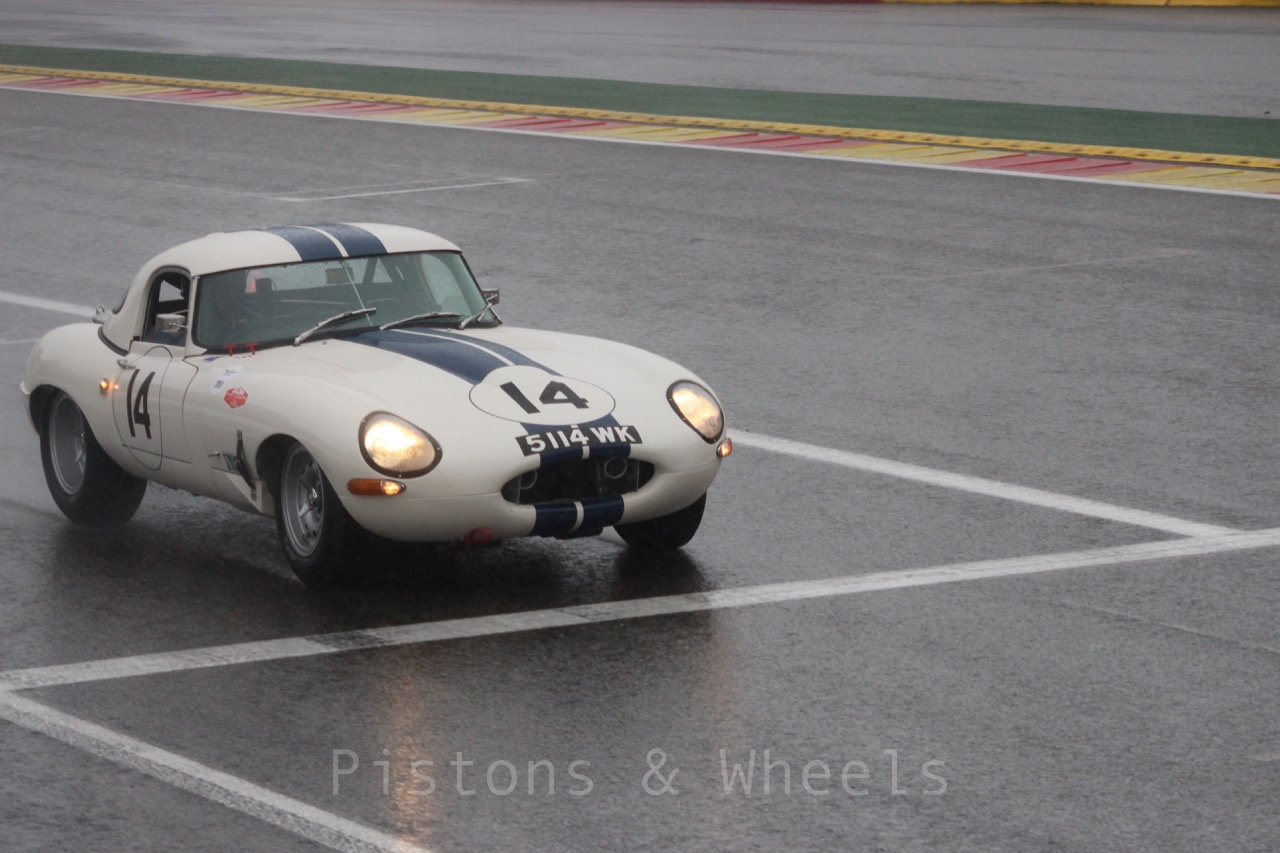
5114WK #S850664 Bright S Cunningham

In 1962 Cunningham bought 3 Type E lightweight from the factory, they will be registered 5114WK 5115WK and 5116WK.

The first Cunningham lightweight, # S850659, 5115WK, was the second lightweight produced by Jaguar Competition. It will be driven by Cunninghan and Grossman at the 24h of Le Mans 1963 wearing number 15 and will finish 9th overall.

The Second Cunningham lightweight, # S850664, registered 5114WK is the one in these photos. This is the seventh lightweight product.

1963 at the 24h of Le Mans it will be driven by Hansgen and Pabst wearing the n ° 14, it will give up at the first hour (gearbox). The car will then be placed at the Costa Mesa museum and will be sold to Anthony Bamford in 1973.

The third Cunningham Lightweight, # S850665, registered 5116WK, is the eighth lightweight produced. Driven by Salvadori Richards n ° 16, it will be seriously injured at the sixth hour of the race and will serve as a reserve of parts for the two other cars,

12h de Sebring 1963, Bruce McLaren- Walt Hansgen num 20 – 8ème

24h du Mans 1963, num 14 Augie Pas – Walt Hansgen (essais : 13eme 4:06:900 – abandon boite de vitesses)

The car today:


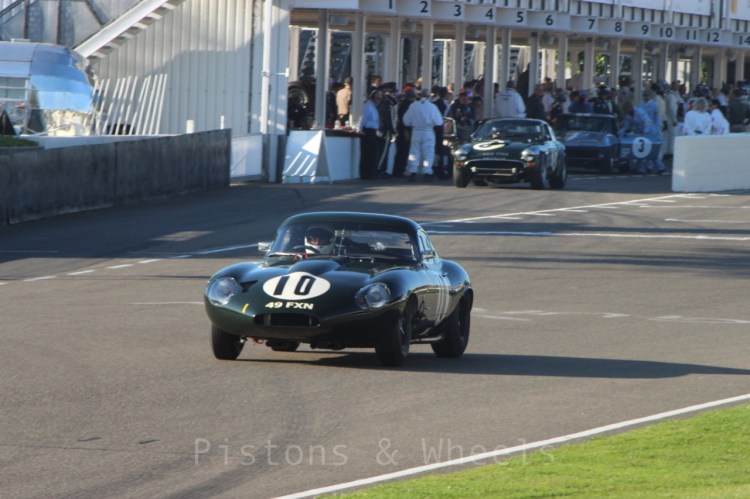
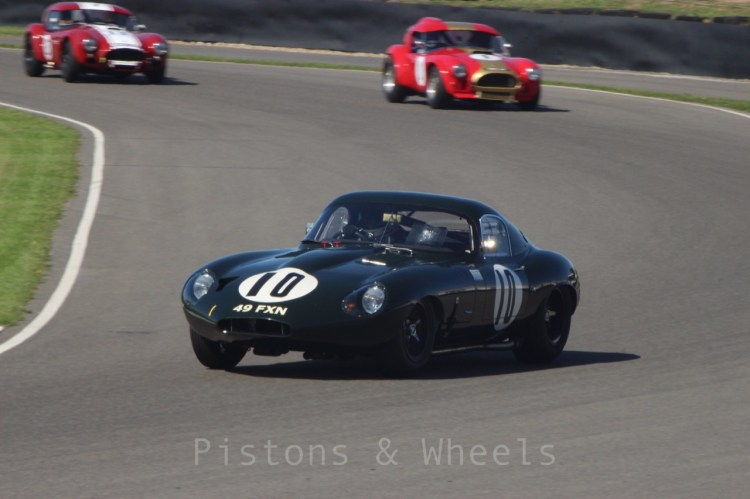
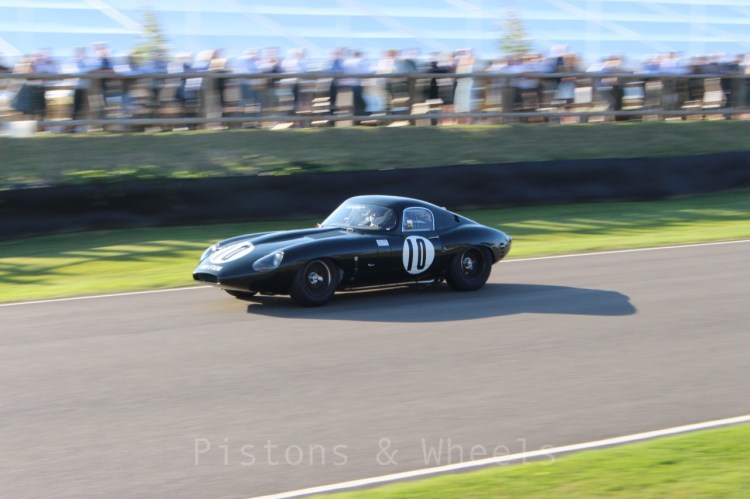
49FXN. #S850663 one of the two Low Drag Lightweight

Delivered in May 1963 to Peter Lumsden who entered it in the 1000 km Nürburgring. Unfortunately the car was damaged and will return to the factory to replace the monocoque chassis. She will still participate in the TT at Goodwood where Peter Lumsden will finish 9th.

When season 63 ended, Lumsden, Sargent and Sami Klat, aerodynamic engineer, began to think about possible improvements to the car. The entire rear of the latter will be redesigned and after numerous tests the car will be re-cossossed in « Low Drag ». Other items will also be changed on the car at the motor, distribution and finally a ZF box was installed there in 5 reports.

The Goodwood Sussex Trophy will be the first race to see modified 49FXN. The car finished in an encouraging 7th place. But it will be especially during the test days for the 24 hours of Le Mans that the car will reveal its full potential by finishing second in its class and 6th in the general classification.

The car will once again participate in the 1000 km Nürburgring and the 24h of Le Mans, driven by the pair LumsdenSargent. Unfortunately they will not finish either of these two races. In 1964, the car will still run at Brands Hatch where it will finish 2nd and at the Goodwood TT which it will finish in 4th place.

1965, Lumsden finished 4th at Goodwood and then sold the car to John Scott Davies.

The car today :


Note: The second low drag lightweight, 4868WK, is that of the German pilot Peter Knocker and Peter Lindner. This slightly different body from that of Sami Klat, was the work of Malcolm Sayer. It was undoubtedly the fastest type E with an engine developing 344 hp. Unfortunately a tragic accident in Montlhery in 1964, killed Peter Lindner and destroyed the car. It took Classic Motor Cars 7000 hours of work to rebuild the car at the request of Jaguar in 2014.


Toute reproduction interdite sans l’autorisation de l’auteur – Reproduction prohibited without permission of the author

@waltheradriaensen pistonsandwheels

C-Type Jaguar at Le Mans

Please excuse my english, we do our best…..

It was in 1950 that William Lyons, founder of the brand Jaguar, decided to launch the design of the first car for competition only and especially at the 24h of Le Mans. The fame of this race was, at the time, much more important than today. The F1 championship did not exist yet and a victory on the French circuit had direct repercussions on sales. « Win on Sunday, sell on Monday ». For the 1950 edition, three prepared XK120s started under the cover of a private engagement, and finished with an honorable 12th place. One of the three XKs, the one driven by Johnson and Hadley even climbed to 3rd place in the standings for more than half of the race.

The design of the C-Type was far removed from that of the XK120, even though its official name was 120C which was to prove to be a commercial move to boost sales of the XK120 model as a result of the C-Type competition results.

Its chassis is tubular and lightweight. This is the famous XK 3.4L engine, 6 cylinders in line of the XK120 developing 160 hp. Which once prepared for the C-Type will increase to 205 hp thanks to its 2 carburetors SU H8, a camshaft « high lift « , an increase in the diameter of the exhaust valves and a modification of the springs of those one. The suspension is improved and the steering gets a more precise and direct rack.

The design of its aluminum body is entrusted to aerodynamicist Malcolm Sayer. He will study a revolutionary line more drawn and meeting new aerodynamic standards. The only compromise required by William Lyons, the addition of a grille reminiscent of the XK120 model to satisfy the pride of customers of its road model.

It is thus armed with its 205 hp and its 940 kg that the C-Type presented itself at the tests of the 24h of Le Mans of 1951.

Jaguar came with three cars: the XKC001, XKC002 and XKC003 chassis, under the registrations: 153RW, 210RW and 032RW. Note that at that time the cars went to France by road in convoys …. element hard to imagine nowadays.

The competition was large and mainly composed of Ferrari 340 America and 212, Talbot Lago T26 and their formidable 4.5 l engine, Cunningham and Aston Martin DB2.

Stirling Moss on the XKC002 in the lead had to give up in the middle of the night but after the double round clock it was the Jaguar C-Type XKC003 of Peter Walker and Peter Whitehead who passed in first position under the checkered flag after having traveled more than 3611 km.

Bringing the first victory on the Le Mans circuit at Jaguar.

For the 1952 season, a new bodywork was imagined to increase speed in the interminable straight line of Hunaudieres which was not cut by its two chicanes. This body was mounted on XKC001, XKC002 and XKC011 chassis.

The competition was sharp, in addition to Ferrari 340 America, Aston DB3 spyder, Cunningham and Talbot-Lago, Mercedes returned to the Sarthe after 20 years of absence and its 300 SL seemed formidable.

The temperatures of June 1952 were particularly high at Le Mans and the low air intake of the new C-Type bonnets caused the abandonment of the english cars by overheating, leaving the victory to the Mercedes 300SL.

Note that during this edition, Pierre Levegh drove more than 16 hours without stopping at the wheel of the Talbot-Lago then at the head of the race. This feat ended with the breaking of a bolt on the crankshaft less than two hours before the finish but the driver was acclaimed by the crowd for his feat.

For the 1953 Le Mans, the C-Type received Webber carburetors and disc brakes developed by DUNLOP, which was a revolution. The Jaguars reached the speed of 245km / h, against 250km / h for Cunningham. Thanks to their braking system they made up for lost time. Mercedes was not present at the 24 Hours of Le Mans 1953 but Alfa Romeo lined up its 6C / 3000CM, Ferrari the 340MM, Cunningham C4 and C5 and Talbot-Lago its T26.

The start of the race was unbelievably tight but the night was fatal for the reliability of the Alfa Romeo. At daybreak the C-Type occupied the 1st, 2nd and 4th place that they were not to leave.

1st Jaguar Type-C XKC051 N18 Rolt-Hamilton, 2nd Jaguar Type-C XKC053 N17 Stirling Moss-Walker, 3rd Cunningham Walters-Fitch and 4th Jaguar C-Type XKC052 N19 Whitehead-Stewart. 

Following this victory Jaguar decided to launch the studies of its new model: the Jaguar D-Type which will represent the brand at the world championship and the 24h of Le Mans from 1954 to 1957. This will be the subject of a future article. 

You will find many pictures of Jaguar C-Type on the website http://www.pistonsandwheels.com, here are some examples. It is exclusively authentic Jaguar C-Type chassis number: XKC004 – XKC008 – XKC006 – XKC037 and XKC021.

Toute reproduction interdite sans l’autorisation de l’auteur – Reproduction prohibited without permission of the author

@waltheradriaensen pistonsandwheels
Porsche 917 #001 the rebirth

Please excuse my english, we do our best…..

It was on March 10, 1969 that the Porsche 917 chassis 001 was completed, just a few days before the official presentation of the model at the Geneva Motor Show. Just one month before the presentation of the 25 copies of the 917 to the ITC (International Sport Commission) in April to obtain its homologation.

It is the change in the regulation of this commission that is behind Project 917.

In 1968, the CSI ended the Group 6 prototype sports category by more than 3 liters. Only prototypes with less than 3 liters and Group 4 sports cars with a maximum of 5 liters, produced with a minimum of 50 units, were eligible for the world championship. The GT40, which was produced with more than 50 copies, would once again be the queens of the Sarthe circuit. In 1969, the CSI reduced the minimum quantity of production from 50 to 25 copies, convinced that no manufacturer would be crazy enough to build 25 prototypes. A rumor nevertheless spread very quickly, Maranello had launched the manufacture of a new prototype in order to regain the victory at Le Mans (512). Porsche had to react, it was still a significant investment but the German firm embarked on this challenge a little crazy: to design a new model in 10 months and produce 25 copies to finally cap his first crown at the 24h du Mans. Circuit where the brand had shone many times by victories category but never won the race.

In view of the time left to create the car, many of the techniques used will already have proven themselves on the previous model: the 908. Designed by Ferdinand Piëch, Helmuth Bott and Hans Metzger the 917 will have, like the 908, a tubular chassis in aluminum. That of the 917 will only 47 kg.

The engine, which was designed by Hans Mezger, director of the study department of the sport department, will be a flat 12 in magnesium (block and cylinder head) developing 530 hp. The bodywork, will be polyester and fiberglass glued. This one will weigh in long tail version, 107 kg. Which, once completed and engine mounted, will make the 917 a monster of more than 530 hp and less than 800 kilos.

In the court of the factory Zuffenhausen, the 25 Porsche 917s are waiting for the inspection by Dean Delamont and Herbert Schmidt of the CS1. 001 is in the foreground. Note that the second and third car were num, they had already run in the Le Mans test days earlier. Legend has it that some cars were still equipped with truck axles, but nothing is proven about it.

The 917 will become in 1970 and 1971 the best car in the world and still today, for many, the most beautiful sports car of all time. It will exist with different types of bodies: LH for long tail, K for the short version and a spider version. These different versions will allow the car to perform on all types of tracks in the world championship, routes as different as Le Mans, Spa, Sebring or the Nürburgring. But the winners of the Porsche 917 is not the purpose of this article.

Let’s get back to these lines: chassis # 001. This chassis did not participate in any race, he served for many tests and mainly presentation car at various promotion fairs.

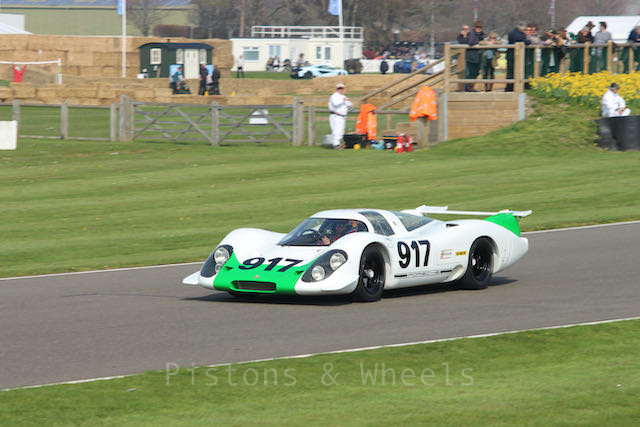
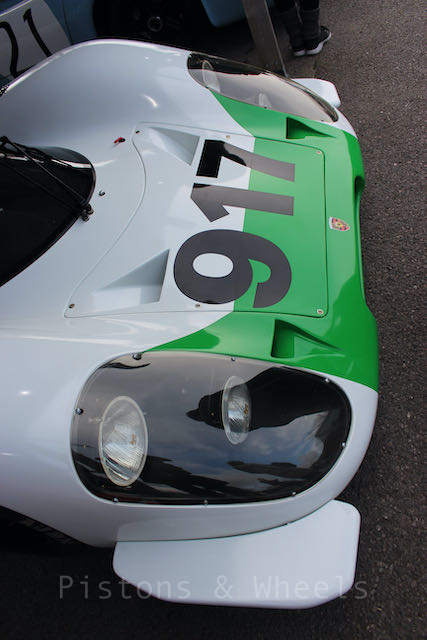
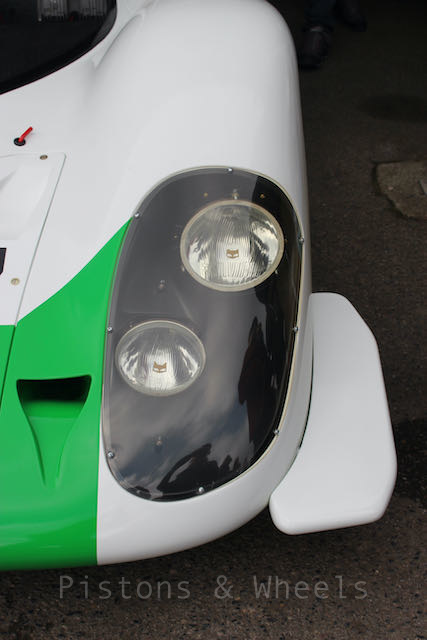
 Historically # 001 was a white LH (long tail) chassis with green painted front and a 917 logo. For different promotional campaigns, 1969 it was repainted in white and orange then in the colors Gulf, orange and blue, at the moment when the 917 were represented in the race by John Wyer Automotive Engineering.

In 1971, following the victory of a Porsche 917 K version at the 24 Hours of Le Mans, driven by Hans Hermann and Richard Attwood, the rear of the car was modified to adopt the bodywork « K ». The bodywork will be repainted in the colors of the victorious car to represent the car around the world, and then be displayed at the Porsche Museum in this configuration. Remember that this victory was the first in a long series on the Sarthe circuit and will remain forever highly symbolic for the Stuttgart firm

It’s under these colors that # 001 slept until 2018.

To celebrate the 50th anniversary of the creation of this legendary model, the Porsche Museum decided at the end of 2017 to hand over chassis # 001 in its original condition, in the livery where she was at the 1969 presentation in the factory yard. (See vintage photo above) 

When, in 2018, the rebuilding of the chassis began, Porsche Museum began by completely dismantling the car. They could then see that the chassis was the # 001 on 2 elements specific to this chassis: the absence of diagonal reinforcement in front of the pedals and on the right side of the car a recess for the exhaust system. Recess that was subsequently closed to match the K body.

After checking the chassis modifications and checking the feasibility of putting the chassis back into its original configuration, the technicians began the reconstruction work, using, where possible , the original parts of the car and based on the original documents rebuild the original project. The original roof, the windshield, the door frames and the two 001 tanks were found. For the rest the use of 3D technology was widely used, especially to create, from the drawings, the negative molds essential for the realization of the bodywork with medical precision. It took more than a year of work to finally be able to fix the new front part to the frame. Then the engineers worked on the recreation of the rear chassis in LH version as it was originally. The modification in short tail (K) had involved a shortening of this part of the car. 

For the first time in 50 years Porsche would have to recreate a rear frame and have a long tail made of polyester laminate with fiberglass. The manufacture of movable shutters was, also, particularly delicate. Close to the aeronautical techniques of the time, the materials and the specificities of the latter gave a lot of trouble to the engineers of Porsche Museum. 

After 10 months of work the engine could finally be reassembled in the chassis and the car was ready to restart. There was no question of back # 001 in its initial configuration for only exposed to the Museum, the management of Porsche wanted to see the car evolve on the circuits and to perfect the result, Porsche made new magnesium wheels flow in all identical point to the 1969 rims.
The car was presented in Stuttgart in January 2019.

Here she is on the track at the Goodwood Member’s Meeting in 2019 and in the Porsche Museum in Stuttgart, surrounded by other 917s as part of the exhibition « 917 50years »